
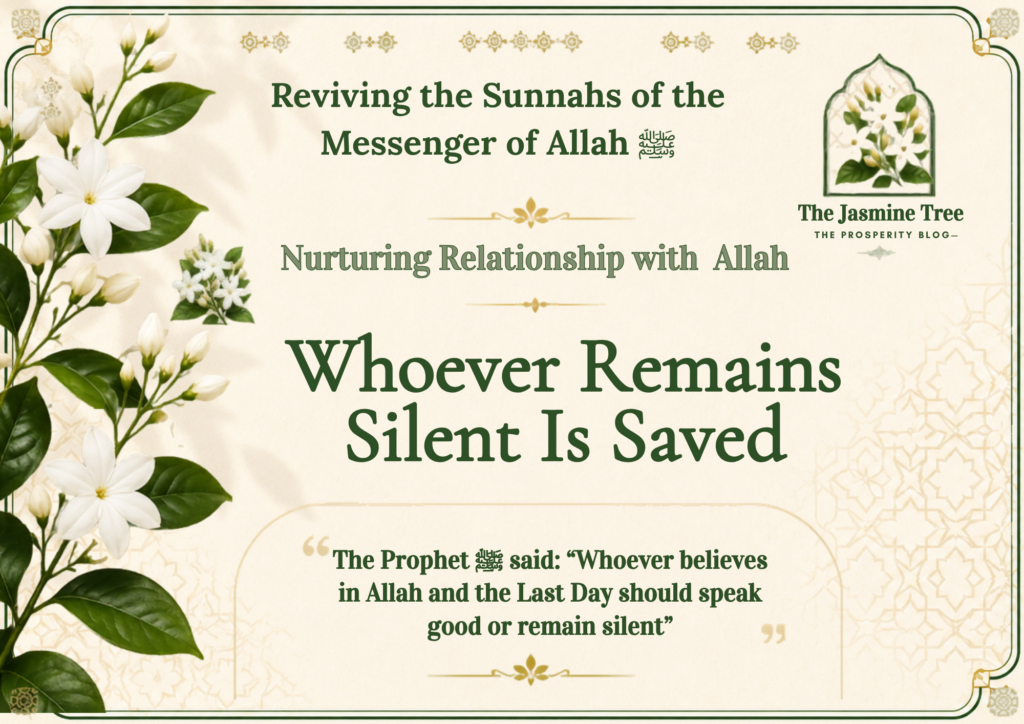
The Messenger of Allah ﷺ said:
“Whoever remains silent is saved”
And he ﷺ said:
“Whoever believes in Allah and the Last Day should speak good or remain silent”
Agreed upon
These two hadiths place before us a precise measure for speech and remind us that safety is not always found in how much we say, but sometimes in the word we held back, the news we chose not to pass on, the argument we refused to enter, and the response we decided to leave unsaid
Silence does not mean remaining quiet about the truth, abandoning sincere advice, or failing to defend someone who has been wronged. Rather, it means learning to ask ourselves before every word: Is there good in what I am about to say? Will it repair or damage? Will it comfort or wound? Will it put out a fire or ignite one? And is this even something that concerns me and deserves to be said?
If there is no good in the speech, then silence is safer for the heart and the tongue, and perhaps it may become a means of salvation whose value we only understand after the moment has passed
The Prophet ﷺ repeatedly warned us about the danger of the tongue. He said:
“The Muslim is the one from whose tongue and hand other Muslims are safe”
Agreed upon
The tongue can harm just as the hand can, and sometimes its effects reach even further. One word can break a heart, damage a relationship, expose someone’s private matters, ignite a conflict, spread something whose truth we do not know, or leave a wound that remains long after we have forgotten what we said
That is why, when Muʿādh رضي الله عنه asked the Prophet ﷺ about the matter that governs all of this, he took hold of his tongue and said:
“Restrain this”
Muʿādh asked: “O Prophet of Allah, will we really be held accountable for what we say?”
He ﷺ replied:
“Are people thrown into the Fire on their faces for anything other than the harvest of their tongues?”
And ʿUqbah ibn ʿĀmir رضي الله عنه asked:
“O Messenger of Allah, what is salvation?”
He ﷺ replied:
“Control your tongue, let your home be sufficient for you, and weep over your sins”
This is deep Prophetic training: salvation is not found in speaking more, but often in knowing when to refrain
That is why the meaning is gathered so powerfully in his ﷺ words:
“Whoever remains silent is saved”
One of the clearest lessons about the danger of speech can also be seen in the incident of al-Ifk, when words passed from one person to another, suspicion became conversation, and conversation became a grave trial that reached the household of Prophethood itself
Allah then revealed:
(لَوْلَا إِذْ سَمِعْتُمُوهُ ظَنَّ الْمُؤْمِنُونَ وَالْمُؤْمِنَاتُ بِأَنفُسِهِمْ خَيْرًا وَقَالُوا هَٰذَا إِفْكٌ مُّبِينٌ)
An-Nūr 24:12
“Why, when you heard it, did the believing men and women not think well of one another and say, ‘This is an obvious falsehood’?”
Among the great lessons of this incident is that a believer is not a carrier of everything they hear, not a passageway for every piece of news that reaches them, and not required to comment on everything
Not everything we know needs to be said
Not everything we hear needs to be repeated
Not every argument needs our participation
Not every insult needs a reply
And here comes another meaning we urgently need in our time: it is no longer only our tongues that need to learn silence
Our devices need silence too
How many words have we never spoken aloud, yet typed with our fingers
How many reports have we forwarded without verifying them
How many arguments that had nothing to do with us have we entered
How many hours have disappeared into endless scrolling, useless comments, and following every small detail until our time becomes filled with digital idle talk just as gatherings can be filled with empty speech
The Prophet ﷺ said:
“Part of the excellence of a person’s Islam is leaving what does not concern them”
And how much today does not concern us, yet consumes our time, hearts, and lives
Perhaps part of reviving this Sunnah is to give ourselves a period each day when the phone becomes silent just as the tongue becomes silent
A time without messages
Without arguments
Without comments
Without endless scrolling
Without chasing every new thing
A time we reclaim for our hearts, our families, books, remembrance, duʿā’, and work that truly benefits us
How many words, had they remained in the chest, would have saved us from long regret
How many conflicts began with one sentence that did not need to be said
How many hours have disappeared in speech that added nothing to our worldly life or our Hereafter
Perhaps one of the Sunnahs we most need to revive today is learning silence again
Not the silence of weakness, but the silence of wisdom
Not silence in the face of truth, but the silence of someone who understands the value of words and knows that every word is counted
Speak good, or remain silent
And whoever remains silent is saved
And perhaps in this age of constant noise, we need one more reminder:
Sometimes, silence even the noise of the screenس
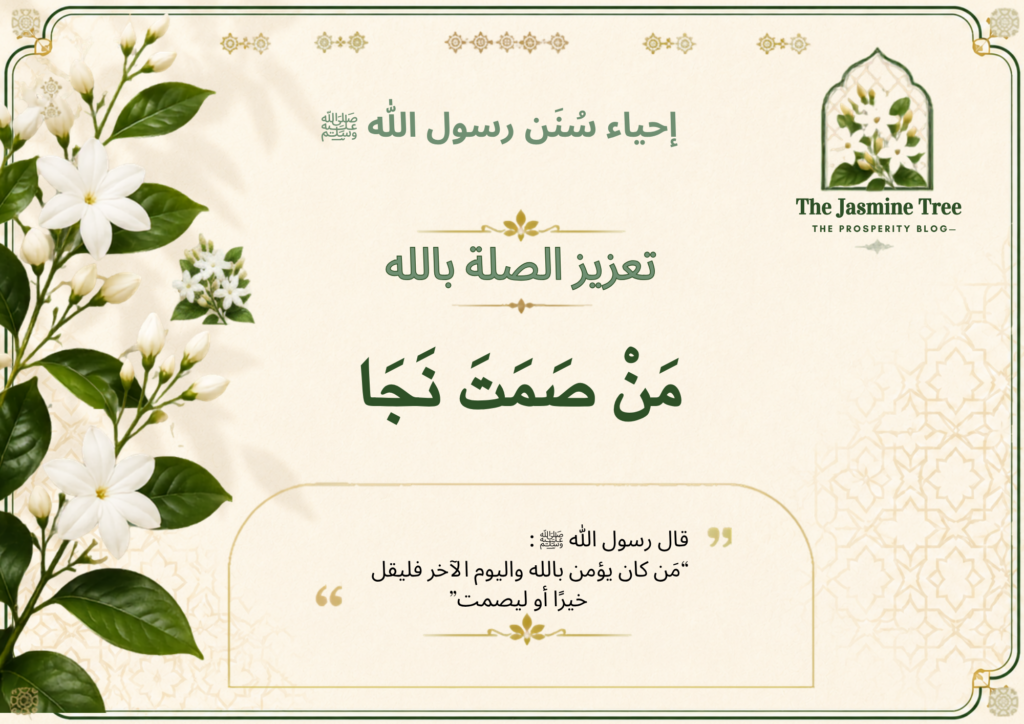
مَنْ صَمَتَ نَجَا
:قال رسول الله ﷺ
«مَنْ صَمَتَ نَجَا»
:وقال ﷺ
«مَن كان يؤمن بالله واليوم الآخر فليقل خيرًا أو ليصمت»
متفق عليه
هذان الحديثان يضعان أمامنا ميزانًا دقيقًا للكلام، ويذكّراننا بأن النجاة ليست دائمًا في كثرة ما نقول، بل قد تكون أحيانًا في الكلمة التي أمسكنا عنها، وفي الخبر الذي لم ننقله، وفي الجدل الذي لم ندخله، وفي الرد الذي آثرنا أن نتركه
فليس المقصود بالصمت أن نسكت عن الحق، أو أن نترك النصح، أو أن نتخاذل عن الدفاع عن مظلوم، وإنما أن نتعلم أن نسأل أنفسنا قبل كل كلمة: هل فيما سأقوله خير؟ هل سيصلح أم يفسد؟ هل سيواسي أم يجرح؟ هل سيطفئ نارًا أم يشعلها؟ وهل هو أصلًا مما يعنيني ويستحق أن أقوله؟
فإن لم يكن في الكلام خير، كان الصمت أسلم للقلب واللسان، وربما كان سبب نجاة لا نشعر بقيمته إلا بعد أن نتجاوز الموقف
:وقد بيّن النبي ﷺ خطورة اللسان في مواضع كثيرة، فقال
«المسلم من سلم المسلمون من لسانه ويده»
متفق عليه
فاللسان قد يؤذي كما تؤذي اليد، بل قد يمتد أثره أبعد منها، فكلمة واحدة قد تكسر قلبًا، أو تفسد علاقة، أو تهتك سترًا، أو تشعل خصومة، أو تنقل خبرًا لا نعرف حقيقته، أو تترك جرحًا يبقى طويلًا بعد أن نكون قد نسينا ما قلناه
:ولذلك لما سأل معاذ رضي الله عنه النبي ﷺ عن ملاك الأمر، أخذ بلسانه وقال
«كُفَّ عليك هذا»
فقال معاذ: يا نبي الله، وإنا لمؤاخذون بما نتكلم به؟
:فقال ﷺ
«وهل يكب الناس في النار على وجوههم إلا حصائد ألسنتهم»
:وسأل عقبة بن عامر رضي الله عنه النبي ﷺ
«يا رسول الله، ما النجاة؟»
:فقال ﷺ
«أمسك عليك لسانك، وليسعك بيتك، وابك على خطيئتك»
:إنها تربية نبوية عميقة على أن النجاة لا تكون بكثرة الكلام، بل أحيانًا بحسن الإمساك عنه، ولذلك جاء المعنى جامعًا في قوله ﷺ
«مَنْ صَمَتَ نَجَا»
ومن أعظم الشواهد على خطورة الكلمة ما وقع في حادثة الإفك، حين انتقل الكلام بين الناس، وتحول الظن إلى حديث، والحديث إلى فتنة عظيمة مسّت بيت النبوة نفسه، حتى أنزل الله تعالى
(لَوْلَا إِذْ سَمِعْتُمُوهُ ظَنَّ الْمُؤْمِنُونَ وَالْمُؤْمِنَاتُ بِأَنفُسِهِمْ خَيْرًا وَقَالُوا هَٰذَا إِفْكٌ مُّبِينٌ)
النور: ١٢
ومن دروس هذه الحادثة أن المؤمن ليس ناقلًا لكل ما يسمع، ولا ممرًّا لكل خبر يصل إليه، ولا مطالبًا بأن يعلّق على كل شيء
ليس كل ما نعرفه يجب أن نقوله
وليس كل ما نسمعه يجب أن ننقله
وليس كل نقاش يجب أن ندخله
وليس كل إساءة تحتاج إلى رد
وهنا يأتي معنى آخر نحتاجه بشدة في زماننا: لم يعد اللسان وحده هو الذي يحتاج إلى أن يتعلم الصمت، بل أجهزتنا أيضًا تحتاج إلى الصمت
كم من كلمة لم ننطق بها بألسنتنا، لكننا كتبناها بأصابعنا
وكم من خبر لم نتحقق منه، لكننا أرسلناه
وكم من نقاش لا يعنينا دخلنا فيه
وكم من ساعات انقضت في تمرير لا ينتهي، وتعليقات لا تنفع، ومتابعة لكل صغيرة وكبيرة، حتى امتلأت أوقاتنا باللغو كما قد تمتلئ به المجالس
وقد قال ﷺ:
«إن من حسن إسلام المرء تركه ما لا يعنيه»
وما أكثر ما لا يعنينا اليوم، لكنه يستهلك أعمارنا وقلوبنا وأوقاتنا
وربما كان من إحياء هذه السنة أن نجعل لأنفسنا وقتًا يصمت فيه الهاتف كما يصمت اللسان
وقتًا بلا رسائل
ولا جدالات
ولا تعليقات
ولا تمرير بلا نهاية
ولا بحث عن كل جديد
وقتًا نسترده لقلوبنا، ولأهلنا، وللكتاب، وللذكر، وللدعاء، وللعمل الذي ينفع
كم من كلمة لو بقيت في الصدر لنجونا من ندم طويل
وكم من خصومة بدأت بجملة كان يمكن ألا تقال
وكم من ساعة ذهبت في حديث لا يضيف إلى دنيا الإنسان ولا آخرته شيئًا
ولعل من السنن التي نحتاج أن نحييها اليوم أن نتعلم الصمت من جديد، لا صمت العجز، بل صمت الحكمة، ولا صمت الانسحاب من الحق، بل صمت من يعرف قيمة الكلمة ويعرف أن كل ما يقوله محسوب عليه
فقل خيرًا أو اصمت
ومَنْ صَمَتَ نَجَا
ولعلنا نحتاج في زمن الضجيج هذا أن نضيف لأنفسنا تذكيرًا آخر
واصمت حتى عن ضجيج الشاشات
