
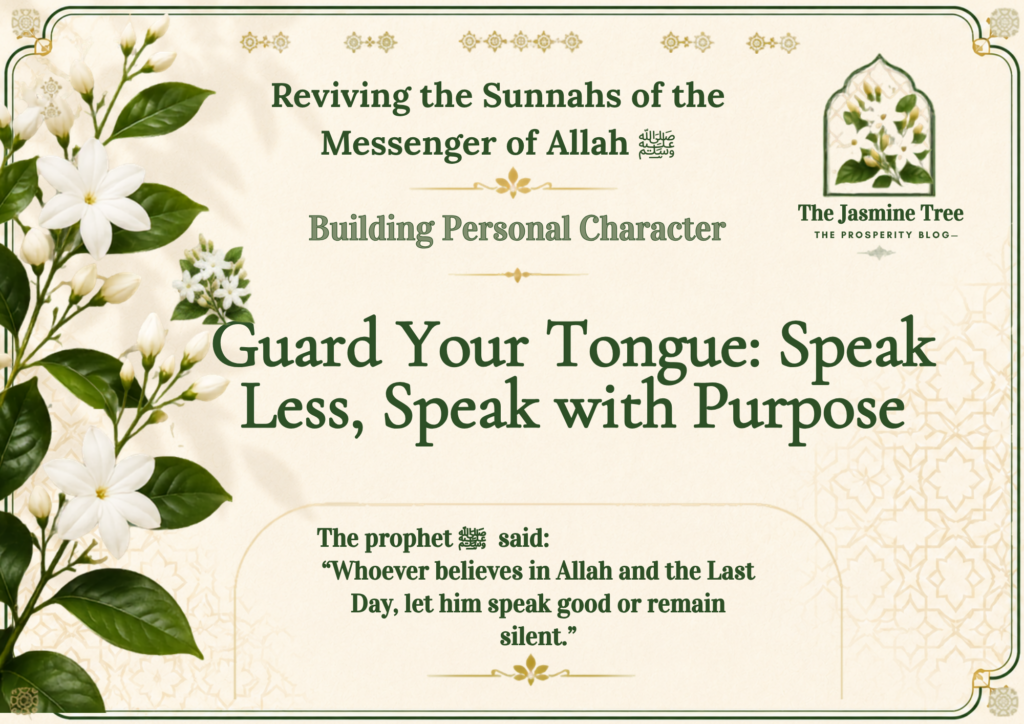
We live in an age that rewards constant speech. Everyone is expected to have an opinion, a reaction, a comment, a story, an explanation, and increasingly, an immediate response to everything that happens. Silence can feel awkward, almost suspicious, while speaking—whether useful or not—has become the default. Yet the Prophetic way teaches something profoundly different: not every thought deserves to become a sentence, not every piece of information needs to be repeated, and not every silence needs to be filled.
The Prophet ﷺ said:
«مَنْ كَانَ يُؤْمِنُ بِاللَّهِ وَالْيَوْمِ الْآخِرِ فَلْيَقُلْ خَيْرًا أَوْ لِيَصْمُتْ»
“Whoever believes in Allah and the Last Day, let him speak good or remain silent.”
Ṣaḥīḥ al-Bukhārī and Ṣaḥīḥ Muslim.
It is striking that the Prophet ﷺ connected speech to faith in Allah and the Last Day. He did not simply say that silence is polite or that excessive speech is socially unpleasant. He reminded us that our words belong to our accountability before Allah. Every conversation is therefore more serious than it appears, because every word leaves us and enters a record.
Allah says:
(مَا يَلْفِظُ مِن قَوْلٍ إِلَّا لَدَيْهِ رَقِيبٌ عَتِيدٌ)
“Not a word does a person utter except that there is an observer ready to record it.”
Qāf 50:18.
This does not mean that the believer becomes withdrawn, cold, or afraid to speak. The Prophet ﷺ spoke beautifully, taught generously, comforted the distressed, joked truthfully, reconciled people, answered questions, encouraged children, and filled gatherings with benefit. The issue is not speech itself. The issue is speech without purpose.
One of the clearest Prophetic principles in this regard is:
«مِنْ حُسْنِ إِسْلَامِ الْمَرْءِ تَرْكُهُ مَا لَا يَعْنِيهِ»
“Part of the excellence of a person’s Islam is leaving what does not concern him.”
Jāmiʿ al-Tirmidhī.
How much unnecessary speech begins precisely by entering what does not concern us? We ask questions whose answers we do not need. We discuss people’s private affairs. We analyze motives we cannot know. We repeat stories merely because they are interesting. We offer opinions that no one asked for. We enter disagreements in which our presence will neither establish truth nor repair anything. Sometimes we speak simply because everyone else is speaking.
And the more a person speaks without need, the more opportunities there are for the tongue to slip.
A conversation begins innocently, then a name is mentioned. A little more is said. Someone adds a detail. Another person remembers something else. Soon what began as harmless talk becomes gossip, mockery, suspicion, exaggeration, exposing someone’s private matter, or passing along something whose truth no one has verified.
The danger of excessive speech is often not planned sin. It is the sin that grows out of words that never needed to be spoken in the first place.
The Prophet ﷺ once gave Muʿādh ibn Jabal, may Allah be pleased with him, a lesson whose severity should make us pause. He took hold of his tongue and said:
«كُفَّ عَلَيْكَ هَذَا»
“Restrain this.”
Muʿādh asked, “O Prophet of Allah, will we really be held accountable for what we say?” The Prophet ﷺ replied:
«وَهَلْ يَكُبُّ النَّاسَ فِي النَّارِ عَلَى وُجُوهِهِمْ ـ أَوْ عَلَى مَنَاخِرِهِمْ ـ إِلَّا حَصَائِدُ أَلْسِنَتِهِمْ»
“Is there anything that throws people into the Fire on their faces—or on their noses—except the harvest of their tongues?”
Jāmiʿ al-Tirmidhī.
The expression “the harvest of their tongues” is extraordinary. A harvest does not appear from nowhere. Something was planted first. Every day we scatter words, sometimes carelessly, and eventually we meet what those words produced.
This is why Allah says:
(لَا خَيْرَ فِي كَثِيرٍ مِن نَّجْوَاهُمْ إِلَّا مَنْ أَمَرَ بِصَدَقَةٍ أَوْ مَعْرُوفٍ أَوْ إِصْلَاحٍ بَيْنَ النَّاسِ)
“There is no good in much of their private conversation, except for one who encourages charity, goodness, or reconciliation between people.”
Al-Nisāʾ 4:114.
The verse does not say that every conversation is sinful. It asks us, rather, to look at what our conversations actually produce. Does this discussion lead to goodness? Does it reconcile? Does it teach? Does it comfort? Does it solve a problem? Does it bring someone closer to Allah? Or is it merely another hour in which words were exchanged and nothing beneficial was left behind?
There is an old Arab saying: “If speech is silver, silence is gold.” It is not a Prophetic hadith, but generations understood the wisdom behind it. Silence gives the mind time to understand before the tongue reacts. It allows a person to listen long enough to see what others miss. And often, the person who does not spend every moment speaking develops something that constant talk can easily suffocate: reflection.
My father often spoke about his grandmother, and one quality in particular remained deeply impressed upon him. She was remarkably quiet—not for a day or a month, but as a way of life. For most of the year she said very little. Yet when a difficult family matter arose, when an obstacle seemed impossible to resolve, and everyone had spoken without finding a way through, she would finally speak. Her few words could untangle what hours of discussion had failed to solve.
That memory carries a wisdom of its own. Perhaps her words had weight precisely because she did not spend them carelessly. She had listened, observed, reflected, and allowed matters to settle before offering judgment. When someone speaks about everything, words gradually lose their weight. But when a person is accustomed to restraint, people often listen when that person finally chooses to speak.
There is also a report attributed to the Prophet ﷺ:
«إِذَا رَأَيْتُمُ الرَّجُلَ قَدْ أُعْطِيَ زُهْدًا فِي الدُّنْيَا وَقِلَّةَ مَنْطِقٍ، فَاقْتَرِبُوا مِنْهُ، فَإِنَّهُ يُلْقِي الْحِكْمَةَ»
“If you see a man who has been given detachment from this world and little speech, draw near to him, for he imparts wisdom.”
It is narrated by Ibn Mājah, but its chain has been disputed and a number of hadith scholars considered it weak, so it should not be presented with the same certainty as the authentic hadiths above. Still, the meaning it expresses—that restraint in speech often accompanies reflection and wisdom—fits a principle repeatedly seen in Islamic teaching.
The Prophet ﷺ himself was the clearest example of purposeful speech. ʿĀ’ishah, may Allah be pleased with her, described his speech as clear and distinct, not rushed or poured out endlessly. His words could be understood and remembered. He did not need a flood of language to make a point because his speech carried intention.
This is an important part of Prophetic character that can be easily overlooked. Eloquence is not the same as abundance. Wisdom is not measured by how long one can speak. Sometimes the most thoughtful person in a gathering is the one who has listened longest before answering.
The Prophet ﷺ also taught that even a single word can carry consequences far beyond the moment in which it is spoken. He said that a servant may utter a word pleasing to Allah without giving it much thought, and Allah raises him because of it; and a servant may utter a word displeasing to Allah without giving it much thought and fall because of it into the Fire.
The frightening phrase is “without giving it much thought.”
That is precisely how much unnecessary speech happens. We do not intend something enormous. We simply speak casually. We tell a joke. We repeat a rumor. We mention someone’s weakness. We make a sarcastic observation. We expose something private because it makes the story better. We speak when angry because silence feels like losing. Then the conversation ends, but the word does not disappear simply because we have moved on.
The Prophet ﷺ was therefore not teaching silence for silence’s sake. He was teaching discipline of the tongue.
This is why, when ʿUqbah ibn ʿĀmir, may Allah be pleased with him, asked the Prophet ﷺ, “O Messenger of Allah, what is salvation?” he replied:
«أَمْسِكْ عَلَيْكَ لِسَانَكَ، وَلْيَسَعْكَ بَيْتُكَ، وَابْكِ عَلَى خَطِيئَتِكَ»
“Control your tongue, let your home be sufficient for you, and weep over your sin.”
Jāmiʿ al-Tirmidhī.
There is something deeply corrective in this advice. We spend enormous amounts of time examining other people—their mistakes, decisions, personalities, homes, children, marriages, opinions, and choices—while the Prophet ﷺ directs the believer inward: control your tongue, make room for quiet, and look at your own sins.
Perhaps if we spent more time examining ourselves, we would have less time to discuss everyone else.
Our age has made this lesson even more urgent because today the tongue is no longer limited to the mouth. The tongue now has a keyboard.
We can speak from the moment we wake until the moment we sleep without physically saying a word. We comment, forward, repost, screenshot, send voice notes, react, argue, analyze, and pass along other people’s stories. A WhatsApp conversation can become backbiting. A forwarded message can become false information. A screenshot can expose a private conversation. A social-media argument can consume an hour and leave behind nothing except anger.
The command “Speak good or remain silent” therefore has a new practical meaning in our time.
Sometimes it means: Do not press Send.
Before sharing something, perhaps we need to ask: Is it true? Does it concern me? Does anyone benefit from knowing it? Is it mine to tell? Am I helping, or simply adding another voice to the noise?
And before entering a conversation, there is an even simpler question:
Does this need to be said?
That question is different from asking only, “Is it true?” Something may be true and still be unnecessary. It may be true and still be backbiting. It may be true and still expose what should remain concealed. It may be true and still hurt someone without achieving any legitimate good.
Truth does not obligate us to say everything we know.
Part of maturity is learning that some things are better left unspoken.
This does not mean abandoning companionship, humor, storytelling, or warm conversation. Islam does not seek to create grim and silent homes. The Prophet ﷺ conversed with his family and Companions, smiled, joked, taught, and listened. But his speech had direction. Even his humor was truthful. His words did not exist merely to consume time.
Perhaps that is the Sunnah we need to revive: not silence itself, but intentional speech.
For a few days, try listening to yourself. Notice how often you speak because something genuinely needs to be said and how often you speak merely because silence appeared. Notice how many times you repeat information that adds nothing, comment on something that does not concern you, or enter a conversation simply because you have something to say.
At the end of the day, ask yourself not only, “Did I say anything sinful?” but also, “How much did I say today that had no purpose?”
Did my words teach anything? Did they comfort anyone? Did they repair a relationship? Did they remember Allah? Did they solve a problem? Did they protect someone’s dignity? Or did they simply fill space?
Silence is not always wisdom, and speech is not always foolishness. There are times when remaining silent would itself be wrong—when truth must be spoken, injustice challenged, someone defended, knowledge taught, or a wounded heart comforted. But wisdom lies in knowing the difference.
And perhaps this is what people sensed in those quiet elders whose words carried unusual weight. They had not exhausted their speech on everything. They listened more than they reacted. They allowed themselves time to understand. Then, when the moment truly required a word, they had one worth hearing.
One day our tongues will become silent, but everything they sent ahead will remain. Some words may be waiting for us as light, while others may be waiting as burdens.
The Sunnah therefore does not merely teach us to speak less.
It teaches us to make our words worth recording.
Before the next opinion, story, comment, forwarded message, or unnecessary argument, pause for a moment and ask:
Does this really need to be said?
If it is good, say it.
And if it is not, perhaps the wiser act of worship is simply to remain silent.
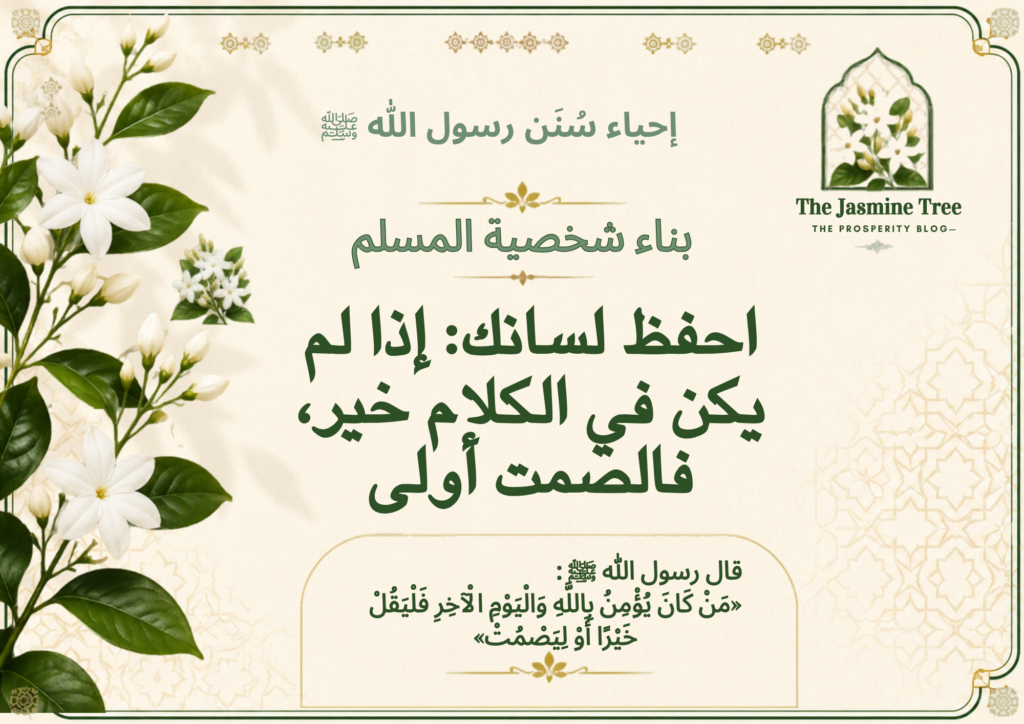
إحياء سُنّة منسية: إذا لم يكن في الكلام خير، فالصمت أولى
نعيش في زمن يكافئ كثرة الكلام، حتى أصبح من المتوقع من كل إنسان أن يكون له رأي في كل شيء، وتعليق على كل حدث، ورد على كل كلمة، وحكاية يضيفها، وتفسير يقدمه، بل واستجابة فورية لما يجري من حوله. وصار الصمت عند كثير من الناس أمرًا محرجًا، وربما مثيرًا للاستغراب، بينما أصبح الكلام، نافعًا كان أو غير نافع، هو الأصل. لكن الهدي النبوي يعلّمنا أمرًا مختلفًا تمامًا: ليس كل خاطر يستحق أن يتحول إلى جملة، وليس كل خبر يحتاج إلى أن يُنقل، وليس كل صمت ينبغي أن نملأه بالكلام
:قال رسول الله ﷺ
مَنْ كَانَ يُؤْمِنُ بِاللَّهِ وَالْيَوْمِ الْآخِرِ فَلْيَقُلْ خَيْرًا أَوْ لِيَصْمُتْ” متفق عليه”
ومن اللافت أن النبي ﷺ ربط الكلام بالإيمان بالله واليوم الآخر، فلم يجعل الصمت مجرد أدب اجتماعي، ولم يجعل كثرة الكلام مجرد عادة مزعجة، بل ذكّرنا بأن كلماتنا داخلة في حسابنا بين يدي الله. فكل كلمة تخرج منا ليست عابرة كما نتصور، بل تنتقل من أفواهنا إلى صحائفنا
قال الله تعالى في سورة ق: ١٨
(مَا يَلْفِظُ مِن قَوْلٍ إِلَّا لَدَيْهِ رَقِيبٌ عَتِيدٌ)
وهذا لا يعني أن يصبح المؤمن منغلقًا أو جافًا أو خائفًا من الكلام، فقد كان النبي ﷺ يتحدث مع أصحابه، ويعلّمهم، ويواسي المهموم، ويمازح بالصدق، ويصلح بين الناس، ويجيب السائل، ويشجع الصغير، ويملأ مجالسه بالنفع والخير. فالمشكلة ليست في الكلام نفسه، وإنما في الكلام الذي لا غاية له ولا ثمرة
:ومن أوضح القواعد النبوية في هذا الباب قوله ﷺ
مِنْ حُسْنِ إِسْلَامِ الْمَرْءِ تَرْكُهُ مَا لَا يَعْنِيهِ” متفق عليه”
رواه الترمذي
وكم من الكلام الزائد يبدأ أصلًا من الدخول فيما لا يعنينا. نسأل أسئلة لا نحتاج إلى أجوبتها، ونتحدث في خصوصيات الآخرين، ونحلل نيات لا نعلمها، ونكرر قصصًا لمجرد أنها مثيرة، ونعطي آراء لم يطلبها منا أحد، وندخل في خلافات لا يترتب على مشاركتنا فيها إصلاح ولا إحقاق حق، وأحيانًا نتكلم فقط لأن الجميع يتكلم
وكلما كثر الكلام بلا حاجة كثرت فرص الزلل
يبدأ الحديث بريئًا، ثم يُذكر اسم شخص، ثم تضاف معلومة، ثم يتذكر أحدهم موقفًا آخر، ثم يضيف آخر تفصيلًا، وفجأة يتحول الكلام الذي بدأ عاديًا إلى غيبة، أو سخرية، أو سوء ظن، أو مبالغة، أو كشف لخصوصية، أو نقل لخبر لم نتثبت من صحته
والمشكلة في فضول الكلام أن الإنسان لا يخطط غالبًا للوقوع في الذنب، لكن الذنب ينشأ من كلام لم تكن هناك حاجة إلى أن يبدأ أصلًا
:وقد أعطى النبي ﷺ معاذ بن جبل رضي الله عنه درسًا شديدًا في خطورة اللسان حين أخذ بلسانه وقال
«كُفَّ عَلَيْكَ هَذَا»
فقال معاذ: يا نبي الله، وإنا لمؤاخذون بما نتكلم به؟
:فقال ﷺ
«وَهَلْ يَكُبُّ النَّاسَ فِي النَّارِ عَلَى وُجُوهِهِمْ ـ أَوْ عَلَى مَنَاخِرِهِمْ ـ إِلَّا حَصَائِدُ أَلْسِنَتِهِمْ»
رواه الترمذي
وتعبير «حصائد ألسنتهم» من أبلغ الصور، فالحصاد لا يأتي من فراغ، بل تسبقه زراعة. ونحن نزرع كلماتنا كل يوم، كلمة بعد كلمة، ثم نلقى يومًا ما حصاد ما زرعناه
:ولهذا قال الله تعالى
(لَا خَيْرَ فِي كَثِيرٍ مِن نَّجْوَاهُمْ إِلَّا مَنْ أَمَرَ بِصَدَقَةٍ أَوْ مَعْرُوفٍ أَوْ إِصْلَاحٍ بَيْنَ النَّاسِ)
النساء: 114
فالآية لا تقول إن كل حديث مذموم، لكنها تدعونا إلى النظر في ثمرة حديثنا: هل يقود إلى خير؟ هل يصلح بين الناس؟ هل يعلّم؟ هل يواسي؟ هل يحل مشكلة؟ هل يقرب إنسانًا من الله؟ أم أنه مجرد ساعة تبادلنا فيها الكلام ثم لم يبق بعدها شيء نافع
وقالت العرب قديمًا: «إذا كان الكلام من فضة فالسكوت من ذهب». وليست هذه العبارة حديثًا نبويًا، لكنها تحمل حكمة واضحة، لأن الصمت يمنح العقل وقتًا للفهم قبل أن يتكلم اللسان، ويمنح الإنسان فرصة للاستماع طويلًا حتى يرى ما قد لا يراه المتعجل، وكثيرًا ما تنشأ الحكمة في المساحة التي لا نملؤها بالكلام
وكان والدي كثيرًا ما يتحدث عن جدته، وقد بقيت في ذاكرته صفة عجيبة فيها. كانت قليلة الكلام بصورة لافتة، لا ليوم ولا لشهر، بل كان الصمت سمة ملازمة لها معظم أيام السنة. لم تكن تدخل في كل حديث، ولا تعلق على كل أمر، ولا تستنزف كلماتها في كل ما يجري حولها. لكن إذا وقعت في العائلة مشكلة استعصت على الجميع، أو عائق لم يعرف أحد كيف يتجاوزه، وبعد أن يكثر الكلام وتدور الآراء من غير أن يصل أحد إلى حل، كانت تتكلم
وغالبًا ما كانت كلمات قليلة منها تكشف الطريق الذي عجز الجميع عن رؤيته
ولعل كلماتها كانت تملك هذا الوزن لأنها لم تكن تنفقها بلا حساب. كانت تسمع، وتراقب، وتتأمل، وتدع الأمور تستقر قبل أن تحكم عليها. فالإنسان الذي يتكلم في كل شيء قد تفقد كلماته شيئًا من وزنها، أما من اعتاد الإمساك عن فضول الكلام فإن الناس كثيرًا ما ينصتون حين يقرر أخيرًا أن يتكلم
:وقد رُوي عن النبي ﷺ
«إِذَا رَأَيْتُمُ الرَّجُلَ قَدْ أُعْطِيَ زُهْدًا فِي الدُّنْيَا وَقِلَّةَ مَنْطِقٍ، فَاقْتَرِبُوا مِنْهُ، فَإِنَّهُ يُلْقِي الْحِكْمَةَ»
ومعناه: إذا رأيتم رجلًا قد رُزق الزهد في الدنيا وقلة الكلام، فاقتربوا منه فإنه يُلقي الحكمة. وقد رُوي هذا الحديث عند ابن ماجه، وتكلّم أهل الحديث في إسناده وضعفه بعضهم، ولذلك لا ينبغي أن نضعه في منزلة الأحاديث الصحيحة السابقة، لكن معناه يشير إلى حقيقة نلمسها كثيرًا: أن قلة الكلام تمنح مساحة للتأمل، وأن الحكمة كثيرًا ما تنضج في الصمت قبل أن تظهر في الكلام
وكان النبي ﷺ نفسه أوضح مثال للكلام المقصود المتزن. فقد وصفت عائشة رضي الله عنها كلامه بأنه واضح بيّن، لا يسرده سردًا سريعًا متتابعًا، بل يتكلم بكلام فصل يفهمه كل من سمعه، حتى إن من يسمعه يستطيع أن يحفظه ويتأمله. ولم يكن ﷺ يحتاج إلى كثرة الكلام ليبلغ المعنى، لأن كلماته كانت تخرج بوعي وقصد
وهنا يظهر جانب مهم من أخلاقه ﷺ قد نغفل عنه: الفصاحة ليست كثرة الكلام، والحكمة لا تقاس بطول الحديث، وقد يكون أعقل من في المجلس هو أكثرهم إنصاتًا وأقلهم استعجالًا في الرد
وقد حذّر النبي ﷺ كذلك من أن كلمة واحدة قد تكون أثقل مما نتصور، فقال إن العبد قد يتكلم بالكلمة من رضوان الله لا يلقي لها بالًا فيرفعه الله بها درجات، وقد يتكلم بالكلمة من سخط الله لا يلقي لها بالًا فيهوي بها في جهنم
ولعل أخوف ما في الحديث قوله ﷺ: «لَا يُلْقِي لَهَا بَالًا»
أي إنه لم يرها شيئًا كبيرًا أصلًا
وهذا هو حال كثير من الكلام الزائد. لا ننوي شرًا عظيمًا، لكننا نتكلم بلا حساب. نمزح، ثم تجرح المزحة إنسانًا. نكرر خبرًا، ثم يتبين أنه غير صحيح. نذكر ضعفًا في شخص غائب، أو نحكي أمرًا خاصًا لأنه يجعل القصة أكثر تشويقًا، أو نرسل كلمة ونحن غاضبون لأن الصمت يشعرنا وكأننا خسرنا الموقف، ثم ينتهي الحديث ونمضي، بينما الكلمة لا تنتهي لمجرد أننا انتقلنا إلى موضوع آخر
ولهذا لم يكن النبي ﷺ يدعو إلى الصمت لذات الصمت، وإنما كان يعلّم ضبط اللسان
وحين سأل عقبة بن عامر رضي الله عنه النبي ﷺ: يا رسول الله، ما النجاة؟ قال ﷺ:
«أَمْسِكْ عَلَيْكَ لِسَانَكَ، وَلْيَسَعْكَ بَيْتُكَ، وَابْكِ عَلَى خَطِيئَتِكَ»
رواه الترمذي
وفي هذا التوجيه معنى تربوي عميق، فنحن نقضي وقتًا طويلًا في فحص حياة الآخرين: أخطائهم، وقراراتهم، وشخصياتهم، وبيوتهم، وأبنائهم، وزيجاتهم، وآرائهم، وخياراتهم، بينما يردنا النبي ﷺ إلى أنفسنا: أمسك لسانك، واجعل لك مساحة من الخلوة، وابك على خطيئتك
ولعلنا لو انشغلنا بمحاسبة أنفسنا أكثر، لقل الوقت الذي ننفقه في الحديث عن الآخرين
وهذا المعنى أشد ضرورة في عصرنا، لأن اللسان لم يعد محصورًا في الفم
لقد صار للسان اليوم لوحة مفاتيح
يمكن للإنسان أن يتكلم من لحظة استيقاظه إلى لحظة نومه من غير أن ينطق بصوت. يعلّق، ويرسل، ويعيد النشر، ويلتقط صورة شاشة، ويرسل تسجيلًا صوتيًا، ويجادل، ويحلل، وينقل أخبار الناس. وقد تتحول مجموعة في واتساب إلى مجلس غيبة، وقد يصبح إعادة إرسال رسالة سببًا في نشر معلومة باطلة، وقد تكشف لقطة شاشة حديثًا خاصًا، وقد يستهلك جدال على وسائل التواصل ساعة كاملة ولا يترك وراءه إلا الغضب
ولهذا صار لقوله ﷺ «فليقل خيرًا أو ليصمت» معنى عملي جديد في زماننا
فأحيانًا يكون الصمت اليوم هو ببساطة:
لا تضغط زر الإرسال
وقبل أن ننقل شيئًا قد يكون من الحكمة أن نسأل: هل هو صحيح؟ هل يعنيني؟ هل يحتاج الناس إلى معرفته؟ هل هو من حقي أن أحكيه؟ هل سأضيف خيرًا أم سأضيف صوتًا جديدًا إلى الضجيج؟
وقبل الدخول في أي حديث يمكن أن نسأل سؤالًا أبسط من ذلك كله:
هل يحتاج هذا فعلًا إلى أن يُقال؟
وهذا السؤال يختلف عن سؤال: هل هو صحيح؟
فقد يكون الكلام صحيحًا، لكنه غير ضروري. وقد يكون صحيحًا، لكنه غيبة. وقد يكون صحيحًا، لكنه يكشف سترًا ينبغي أن يبقى مستورًا. وقد يكون صحيحًا، لكنه يجرح إنسانًا من غير أن يحقق مصلحة معتبرة
ليس كل ما نعرفه يجب أن نقوله
ومن النضج أن نتعلم أن بعض الأشياء تكون أجمل وأحكم حين تبقى بلا كلام
وهذا لا يعني أن نهجر الأنس والمزاح والحديث العائلي الجميل. فالإسلام لا يريد بيوتًا باردة صامتة، وقد كان النبي ﷺ يتحدث مع أهله وأصحابه، ويبتسم، ويمازح، ويعلّم، وينصت، لكن كلامه كان ذا وجهة ومعنى، وحتى مزاحه كان حقًا، فلم تكن كلماته مجرد وسيلة لاستهلاك الوقت
ولعل السُّنّة التي نحتاج إلى إحيائها ليست الصمت في ذاته، بل الكلام الواعي المقصود
جرّب أيامًا قليلة أن تستمع إلى نفسك قبل أن تستمع إلى الآخرين. لاحظ كم مرة تتكلم لأن هناك شيئًا يستحق أن يقال، وكم مرة تتكلم فقط لأن لحظة صمت ظهرت. لاحظ كم مرة تكرر معلومة لا تضيف شيئًا، أو تعلق على أمر لا يعنيك، أو تدخل في حديث لأن لديك رأيًا وحسب
وفي نهاية اليوم لا تسأل نفسك فقط: هل قلت شيئًا حرامًا؟
بل اسأل أيضًا:
كم قلت اليوم من الكلام الذي لم تكن له حاجة أصلًا؟
هل علّمت كلماتي أحدًا؟ هل واسيت إنسانًا؟ هل أصلحت علاقة؟ هل ذكرت الله؟ هل ساعدت في حل مشكلة؟ هل حفظت كرامة إنسان؟ أم أن أكثر كلامي لم يفعل إلا أن ملأ الفراغ؟
وليس الصمت حكمة في كل حال، كما أن الكلام ليس حماقة في كل حال، فهناك مواطن يكون الصمت فيها خطأ، حين يجب أن تُقال كلمة الحق، أو يُدفع ظلم، أو يُدافع عن مظلوم، أو يُعلّم جاهل، أو يُواسى قلب منكسر. وإنما الحكمة أن نعرف متى يكون الكلام عبادة، ومتى يكون الصمت عبادة
ولعل هذا ما كان الناس يشعرون به في أولئك الكبار الهادئين الذين كان لكلماتهم وقع خاص. لم يكونوا قد استهلكوا كلامهم في كل شيء، بل كانوا يسمعون أكثر مما يردون، ويتركون لأنفسهم وقتًا للفهم، فإذا جاءت اللحظة التي تحتاج إلى كلمة، كانت عندهم كلمة تستحق أن تُسمع
وسيأتي يوم تصمت فيه ألسنتنا نهائيًا، لكن الكلمات التي أرسلناها قبلنا ستبقى. قد نجد بعضها ينتظرنا نورًا، وقد نجد بعضها ينتظرنا حملًا ثقيلًا
ولذلك لا تعلمنا السُّنّة أن نتكلم أقل فحسب، بل تعلمنا أن نجعل كلماتنا جديرة بأن تُكتب
فقبل الرأي القادم، أو الحكاية، أو التعليق، أو الرسالة التي سنعيد إرسالها، أو الجدال الذي سننضم إليه، فلنتوقف لحظة ونسأل:
هل يحتاج هذا فعلًا إلى أن يُقال؟
فإن كان خيرًا، فقل
وإن لم يكن كذلك، فلعل العبادة الأحكم في تلك اللحظة أن تصمت
