
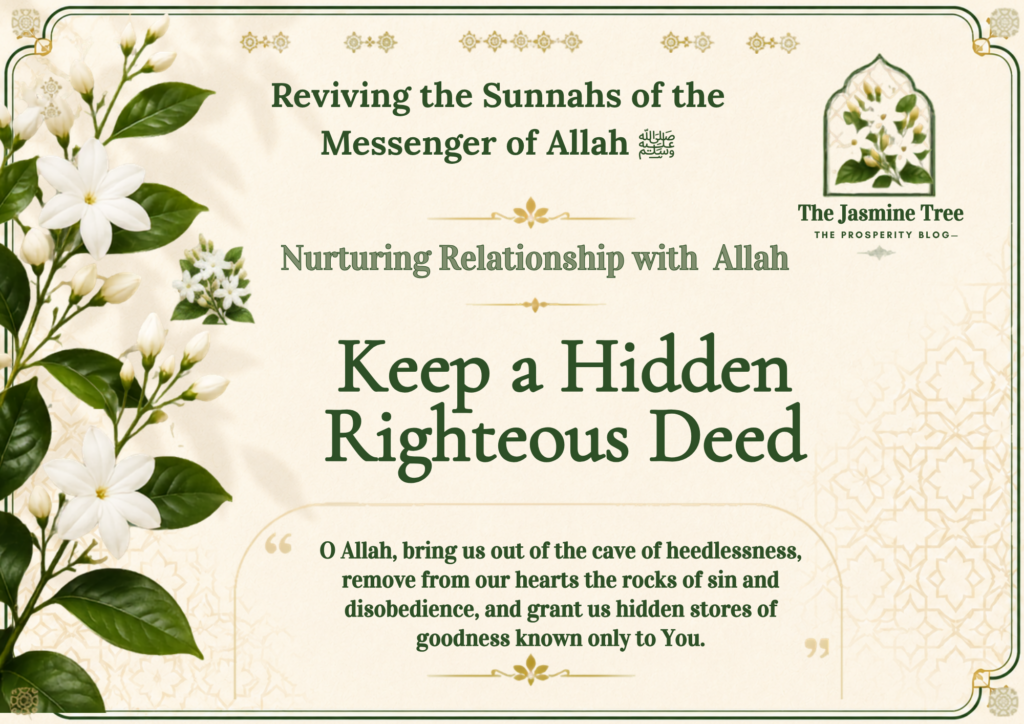
Part of the Prophetic guidance is for a believer to have between themselves and Allah a hidden righteous deed, sincerely done for Allah alone, with no witness to it except Allah—a deed unseen by people, done without waiting for praise, gratitude, or recognition, and whose true value is known only to one’s Lord.
A khabī’ah (خَبِيئَة) is a righteous deed you conceal from people and keep as a secret between yourself and your Creator. It may be a prayer in the depths of the night, a duʿā’ for someone who does not know you pray for them, relieving someone’s hardship, saving a life, helping arrange treatment for someone who is ill, supplying water to those in need, reconciling people, paying off a debt, protecting someone’s dignity, teaching beneficial knowledge, honoring one’s parents, remaining chaste in a moment of temptation, or fulfilling a trust when no one is watching.
But the secret of a khabī’ah is not merely that it is hidden. Its true secret is sincerity: that you do it seeking the Face of Allah alone, and that Allah is its only witness.
A hidden righteous deed is not only provision for the Hereafter. Allah may also make it a means of relief from the hardships of this world before the next.
Consider the hadith of the three men trapped in the cave. Allah rescued them through sincere righteous deeds they had performed in the past.
ʿAbdullah ibn ʿUmar رضي الله عنهما narrated that the Messenger of Allah ﷺ said:
“Three men from among those who came before you set out on a journey until nightfall led them to a cave, so they entered it. A rock rolled down from the mountain and blocked the entrance of the cave. They said, ‘Nothing will save you from this rock except that you call upon Allah by mentioning your righteous deeds.’
One of them said: ‘O Allah, I had two elderly parents, and I would never give the evening drink to my family or property before them. One day, I was delayed while seeking something and did not return to them until they had fallen asleep. I milked their evening drink and found them sleeping. I disliked giving it to my family or servants before them, so I remained standing with the cup in my hand, waiting for them to wake until dawn broke. Then they awoke and drank their evening drink. O Allah, if I did this seeking Your Face, then relieve us from what we are suffering because of this rock.’ So the rock moved a little, but they still could not get out.
The second said: ‘O Allah, I had a female cousin who was the most beloved of people to me. I desired her, but she refused me. Then she fell into hardship during a year of famine and came to me. I gave her one hundred and twenty dinars on condition that she allow me access to herself, and she agreed. When I was able to approach her, she said, “Fear Allah, and do not break the seal except by right.” So I withdrew from her, though she was the most beloved of people to me, and I left the gold I had given her. O Allah, if I did this seeking Your Face, then relieve us from what we are suffering.’ So the rock moved further, but they still could not get out.
The third said: ‘O Allah, I hired some workers and paid all of them their wages except one man, who left his wages and went away. I invested his wage until it grew into a great amount of wealth. After some time he returned and said, “O servant of Allah, give me my wages.” I said, “Everything you see—camels, cattle, sheep, and servants—is from your wages.” He said, “O servant of Allah, do not mock me.” I said, “I am not mocking you.” So he took all of it and drove it away, leaving nothing behind. O Allah, if I did this seeking Your Face, then relieve us from what we are suffering.’**
Then the rock moved away completely, and they walked out.”
Agreed upon.
Reflect on their deeds.
They were not all prayers or acts of financial charity. They were devotion to parents, chastity when sin was within reach, and extraordinary honesty in safeguarding the rights of another person.
And most beautifully, each one said:
“O Allah, if I did this seeking Your Face…”
That is the secret of the khabī’ah.
It is not merely that the deed is hidden. It is that it is sincerely for Allah, its true reality known only to Him, and Allah alone bearing witness to the sincerity of the one who performed it.
Three sincere hidden deeds—and each time the rock moved a little, until Allah permitted them to leave.
So how many hidden righteous deeds do we need for Allah to relieve our hardships in this world and the next?
How much do we need one sincere deed stored away with Allah, perhaps to find its effect when every path seems closed—or on the Day when we stand before Him carrying nothing except what we sent ahead?
And what if we revived a Sunnah that has faded from our minds, and with it, the awareness of its importance and its immense effect?
In a time when so much goodness is photographed, posted, and announced, we need to rediscover the beauty of having something no one knows about except Allah.
A hidden deed with no photograph.
No name attached to it.
No praise expected for it.
No witness to it except Allah.
So from today, keep for yourself a hidden righteous deed, sincerely for the sake of Allah.
Perhaps it will be a rock removed from your path in this life, and a light waiting for you in the darkness of the Hereafter.
Peace and blessings be upon you, my master, O Messenger of Allah ﷺ.
Your guidance was a light by which we find our way through the darkness of our sins and the shadows of our own souls.
O Allah, bring us out of the cave of heedlessness, remove from our hearts the rocks of sin and disobedience, and grant us hidden stores of goodness known only to You—deeds with which we may meet You on the Day when we are most in need of Your mercy.
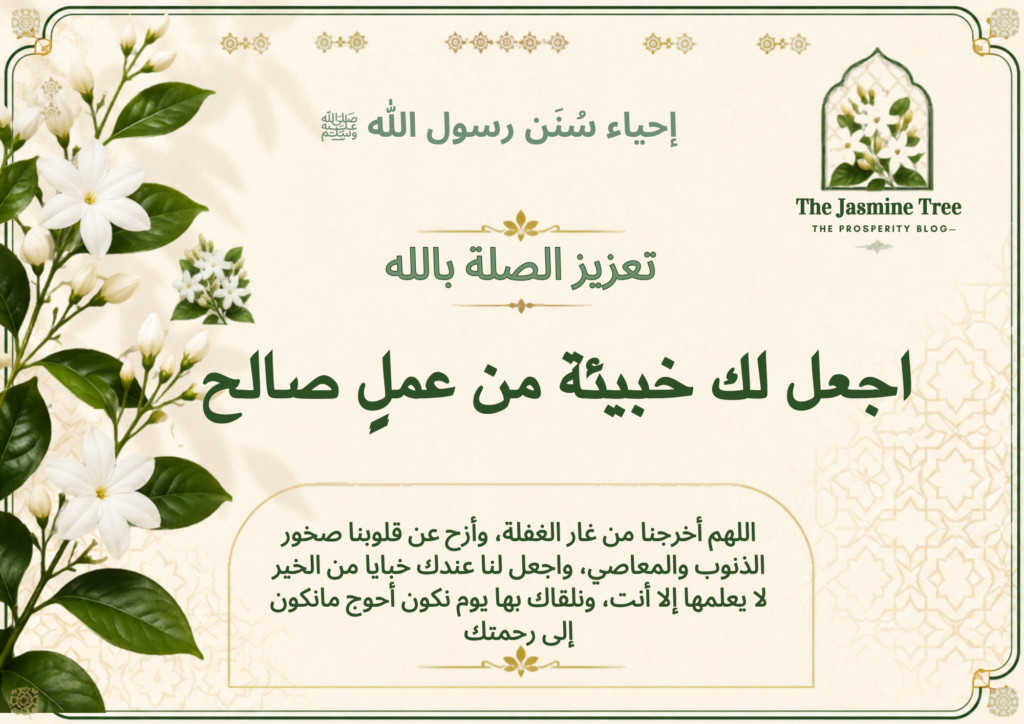
إحياء سنةٍ غابت عن الأذهان: اجعل لك خبيئة من عملٍ صالح
من الهدي النبوي أن يحرص المؤمن على أن يكون بينه وبين الله عملٌ صالح خفيّ، خالصٌ لوجه الله، لا شاهد عليه إلا الله؛ لا يطّلع عليه الناس، ولا ينتظر به ثناءً ولا شكرًا، ولا يعرف أحد مقدار ما بذله فيه إلا ربّه.
فالخَبِيئَة هي عمل صالح تخبئه عن أعين الخلق، وتجعله سرًّا بينك وبين خالقك. قد تكون صلاةً في جوف الليل، أو دعاءً لإنسان لا يعلم أنك تدعو له، أو تفريج كربة، أو إنقاذ نفس، أو السعي في علاج مريض، أو إيصال الماء إلى محتاجين، أو الإصلاح بين متخاصمين، أو قضاء دين، أو سترًا لمسلم، أو تعليم علم، أو برًّا بوالدين، أو عفةً في موطن فتنة، أو أمانةً تؤديها حين لا يراك أحد.
لكن سرّ الخبيئة ليس في خفائها وحده، بل في الإخلاص: أن تعملها ابتغاء وجه الله وحده، وأن يكون الله هو الشاهد الوحيد عليها.
والخبيئة ليست فقط زادًا للآخرة، بل قد يجعل الله فيها فرجًا لكرب الدنيا قبل الآخرة.
وانظروا إلى حديث أصحاب الغار الثلاثة؛ فقد أنجاهم الله بأعمال صالحة خالصة سبق لهم أن عملوها.
عن عبد الله بن عمر رضي الله عنهما، عن رسول الله ﷺ أنه قال
«انطلق ثلاثةُ رهطٍ ممن كان قبلكم، حتى آواهم المبيتُ إلى غار، فدخلوه، فانحدرت صخرةٌ من الجبل فسدت عليهم الغار، فقالوا: إنه لا ينجيكم من هذه الصخرة إلا أن تدعوا الله بصالح أعمالكم
فقال رجلٌ منهم: اللهم كان لي أبوان شيخان كبيران، وكنت لا أغبق قبلهما أهلًا ولا مالًا، فنأى بي في طلب شيء يومًا، فلم أرح عليهما حتى ناما، فحلبت لهما غبوقهما، فوجدتهما نائمين، وكرهت أن أغبق قبلهما أهلًا أو مالًا، فلبثت والقدح على يدي أنتظر استيقاظهما حتى برق الفجر، فاستيقظا فشربا غبوقهما. اللهم إن كنت فعلت ذلك ابتغاء وجهك ففرج عنا ما نحن فيه من هذه الصخرة. فانفرجت الصخرة شيئًا، غير أنهم لا يستطيعون الخروج
وقال الآخر: اللهم كانت لي ابنة عم كانت أحب الناس إلي، فأردتها عن نفسها فامتنعت مني، حتى ألمت بها سنة من السنين فجاءتني، فأعطيتها عشرين ومائة دينار على أن تخلي بيني وبين نفسها، ففعلت، حتى إذا قدرت عليها قالت: اتق الله ولا تفض الخاتم إلا بحقه. فتحرجت من الوقوع عليها، فانصرفت عنها وهي أحب الناس إلي، وتركت الذهب الذي أعطيتها. اللهم إن كنت فعلت ذلك ابتغاء وجهك فافرج عنا ما نحن فيه. فانفرجت الصخرة، غير أنهم لا يستطيعون الخروج منها
وقال الثالث: اللهم استأجرت أجراء وأعطيتهم أجرهم غير رجل واحد ترك الذي له وذهب، فثمرت أجره حتى كثرت منه الأموال، فجاءني بعد حين فقال: يا عبد الله، أد إلي أجري. فقلت له: كل ما ترى من أجرك؛ من الإبل والبقر والغنم والرقيق. فقال: يا عبد الله، لا تستهزئ بي. فقلت: إني لا أستهزئ بك. فأخذه كله فاستاقه، فلم يترك منه شيئًا. اللهم إن كنت فعلت ذلك ابتغاء وجهك فافرج عنا ما نحن فيه
“فانفرجت الصخرة، فخرجوا يمشون»
متفق عليه
تأملوا أعمالهم
لم تكن كلها صلاةً ولا صدقةً؛ كانت برًّا بالوالدين، وعفةً عند القدرة على المعصية، وأمانةً عظيمةً في حقوق الناس
:و الأجمل أن كل واحد منهم قال
«اللهم إن كنت فعلت ذلك ابتغاء وجهك»
هنا سرّ الخبيئة
ليس فقط أن يكون العمل مخفيًّا، بل أن يكون خالصًا لله، لا يعرف حقيقته إلا هو، ولا يشهد على صدق صاحبه إلا الله
ثلاث خبايا صادقة، فانفرجت الصخرة في كل مرة شيئًا، حتى أذن الله لهم بالخروج
فكم من خبيئة نحتاج نحن حتى يفرّج الله عنا كرب الدنيا والآخرة؟
وكم نحتاج إلى عمل صادق نخفيه عند الله، لعلنا نجد أثره حين تضيق بنا السبل، أو يوم نقف بين يديه وليس معنا إلا ما قدّمنا؟
وكيف بنا إذا أحيينا سنة غابت عن أذهاننا، وغابت معها عظمة أثرها؟
في زمنٍ أصبح فيه كثير من الخير يُصوَّر ويُنشر ويُعلن، نحتاج أن نستعيد جمال أن يكون لنا شيء لا يعرفه أحد إلا الله
خبيئة لا صورة لها.
ولا اسم عليها
ولا ثناء ينتظرها
ولا شاهد عليها إلا الله
فاجعل لك من اليوم خبيئةً من عمل صالح خالص لوجه الله
لعلها تكون صخرةً تنزاح عن طريقك في الدنيا، ونورًا يلقاك في ظلمات الآخرة
صلى الله عليك يا سيدي يا رسول الله ﷺ
لقد كان هديك نورًا نهتدي به في ظلمات ذنوبنا وعتمات أنفسنا
فاللهم أخرجنا من غار الغفلة، وأزح عن قلوبنا صخور الذنوب والمعاصي، واجعل لنا عندك خبايا من الخير لا يعلمها إلا أنت، ونلقاك بها يوم نكون أحوج مانكون إلى رحمتك
