
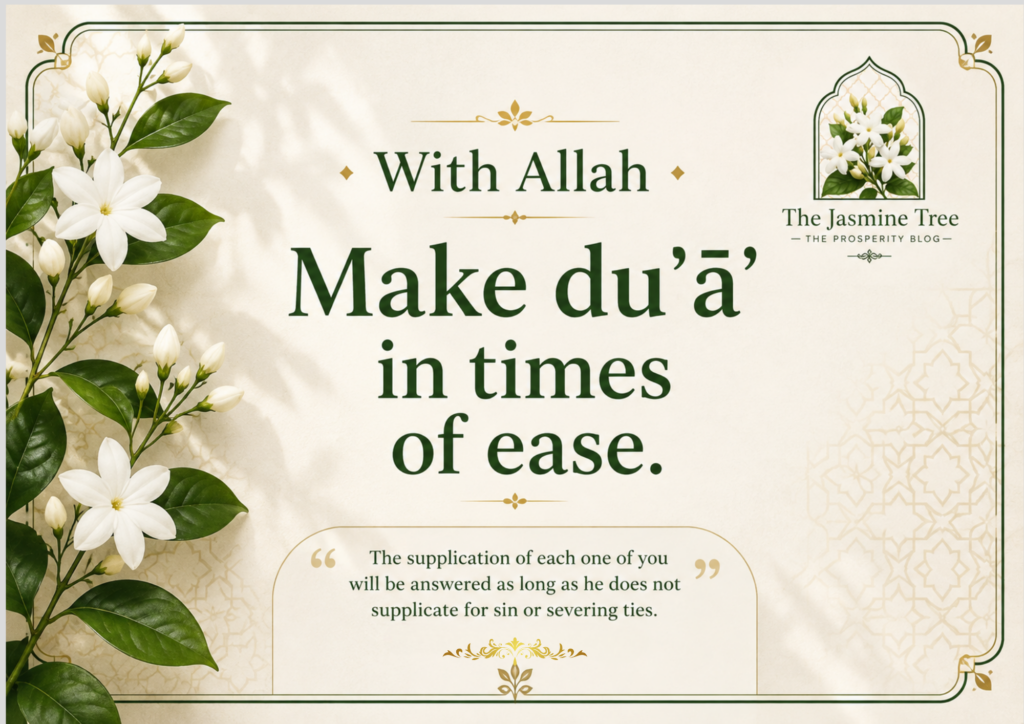
How quickly we find our way to Allah’s door when life becomes difficult.
When illness intensifies, provision becomes tight, we fear for someone we love, or matters around us become complicated, we raise our hands, increase our duʿā’, and call upon Allah with broken hearts, holding tightly to His words:
(أَمَّن يُجِيبُ الْمُضْطَرَّ إِذَا دَعَاهُ وَيَكْشِفُ السُّوءَ)
“Who responds to the distressed when he calls upon Him and removes the harm?” An-Naml 27:62
So we remain at His door, we weep, we hope, and we cling to every sign of relief.
Then, when the hardship is lifted, the need is fulfilled, and life settles again… our duʿā’ begins to lessen, our insistence fades, and it is as though the very door we could not leave yesterday is no longer one we need today.
Allah describes this condition in words that shake the heart:
(وَإِذَا مَسَّ الْإِنسَانَ الضُّرُّ دَعَانَا لِجَنبِهِ أَوْ قَاعِدًا أَوْ قَائِمًا فَلَمَّا كَشَفْنَا عَنْهُ ضُرَّهُ مَرَّ كَأَن لَّمْ يَدْعُنَا إِلَىٰ ضُرٍّ مَّسَّهُ)
“When hardship touches a person, he calls upon Us while lying on his side, sitting, or standing. But when We remove his hardship, he carries on as if he had never called upon Us regarding the hardship that touched him.” Yunus 10:12
How painful this meaning becomes when we see it within ourselves.
To know Allah when we are in need, then remember Him less when we feel secure.
To plead with Him in hardship, then fall silent in ease.
To make duʿā’ a door of desperation, rather than a door of intimacy.
This is not the way of faithfulness with Allah.
The more faithful servant is the one who does not know his Lord only when every other means has failed, but knows Him while healthy, while at peace, while living in abundance, and while blessings are still in his hands before he ever fears losing them.
And so the Messenger of Allah ﷺ guided us to one of the most tender meanings of servitude:
“Know Allah in times of ease, and He will know you in times of hardship.”
The meaning is not that you should wait for hardship and then begin your journey to Him.
Rather, let there already be an old and familiar road between you and Allah.
Among the blessings of this Prophetic guidance is that duʿā’ in times of ease trains the heart in sincerity and attachment to Allah, rather than attachment only to the fulfillment of a need. It teaches us gratitude before asking, and keeps our relationship with Allah alive in every state, rather than becoming a temporary relationship of desperation that ends when the hardship ends.
And whoever remains at Allah’s door in days of ease may hope to find the fruit of that closeness and servitude when difficult days arrive. This is the meaning contained in the Prophet’s ﷺ words:
“Know Allah in times of ease, and He will know you in times of hardship.”
One of the most beautiful practical ways to revive this meaning is to give yourself a regular appointment with Allah during times of ease. Do not wait for illness, fear, or crisis before you learn to remain at His door.
Pray two voluntary rakʿahs, then face the qiblah and sit for a long, quiet session of duʿā’. Begin by praising Allah and sending blessings upon our master Muhammad ﷺ, then open your heart to your Lord and ask Him.
Do not limit your duʿā’ to the immediate needs of this world.
Begin with your greatest needs:
Ask Him for Jannah.
Ask Him for salvation from the Fire.
Ask Him for His pleasure and nearness.
Ask Him for a beautiful ending and steadfastness in faith.
Ask Him for a sound heart, accepted deeds, and forgiven sins.
Then ask Him for every good of this world and the Hereafter.
Ask Him about yourself, your family, your children, and those you love.
Ask Him for well-being before illness.
For protection before exposure.
For steadfastness before temptation.
For relief before you even know where hardship may come from.
Ask Him to turn away from you trials you do not yet know are on their way, and to preserve blessings whose value you have not yet fully recognized.
Sit for a long time.
Do not rush to get up as though duʿā’ were a task to finish.
Speak to Allah about everything in your heart—about your Hereafter before your worldly life, about your fears and hopes, your weakness and shortcomings, the people you love, the needs you can name, and the needs you do not yet know how to express.
And with time, you may discover something more beautiful:
You no longer come to duʿā’ only because you want something from Allah.
You come because you want to be with Allah.
Then duʿā’ transforms from a list of requests into intimacy, from an emergency appeal into a relationship, from a door we know only in calamity into a door where the heart has a standing appointment.
So do not let duʿā’ be only the sound of your voice when you are crying.
Let it also be the conversation of your heart with Allah when you are happy.
Do not wait until the world closes in on you before you knock at His door.
Stand at His door in times of ease, so that you already know the way when hardship comes.
Make for yourself a private gathering with Allah in days of comfort, so that when the day of difficulty arrives, you may find that between you and Allah there is an old familiar road, a door at which you have long stood, and a language of duʿā’ through which you have long spoken to Him.
Know the way to Allah’s door in times of ease, before you ever need to run to it in hardship.
Peace and blessings be upon you, ya saeydi, O Messenger of Allah ﷺ.
You taught us not to know Allah only when we are in need, but to remain at His door in ease and hardship, in joy and sorrow, and in every state.
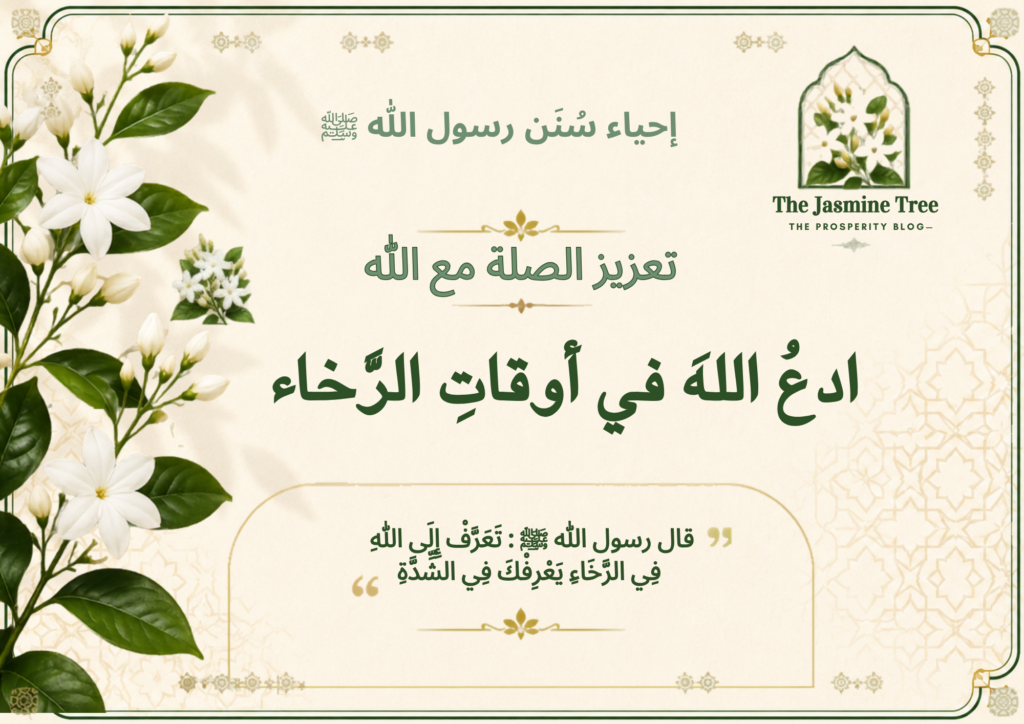
ادعُ اللهَ في أوقاتِ الرَّخاء
ما أسرع ما نهتدي إلى باب الله حين تضيق بنا الدنيا
حين يشتدّ المرض، أو يضيق الرزق، أو نخاف على من نحب، أو تتعقّد الأمور من حولنا، نرفع أيدينا، ونكثر من الدعاء، ونلحّ على الله بقلوب منكسرة، متمسّكين بقوله تعالى
(أَمَّن يُجِيبُ الْمُضْطَرَّ إِذَا دَعَاهُ وَيَكْشِفُ السُّوءَ)
النمل: ٦٢
فنطرق الباب طويلًا، ونبكي، ونرجو، ونتعلّق بكل نفحة فرج.
ثم إذا انكشف الضر، وقُضيت الحاجة، وعادت الحياة إلى هدوئها… فتر الدعاء، وخفّ الإلحاح، وكأن ذلك الباب الذي لم نكن نعرف غيره بالأمس لم يعد لنا إليه حاجة
وقد وصف الله هذا الحال وصفًا يهزّ القلب
(وَإِذَا مَسَّ الْإِنسَانَ الضُّرُّ دَعَانَا لِجَنبِهِ أَوْ قَاعِدًا أَوْ قَائِمًا فَلَمَّا كَشَفْنَا عَنْهُ ضُرَّهُ مَرَّ كَأَن لَّمْ يَدْعُنَا إِلَىٰ ضُرٍّ مَّسَّهُ)
يونس: ١٢
وما أقسى هذا المعنى حين نتأمله في أنفسنا.
أن نعرف الله حين نحتاج، ثم يقلّ ذكره حين نستغني
أن نلحّ عند الشدة، ثم نصمت عند السعة
أن يكون الدعاء باب اضطرار، لا باب أُنس
وهذا ليس من الوفاء مع الله
فالعبد الأوفى هو الذي لا يعرف ربّه فقط حين تنكسر به الأسباب، بل يعرفه وهو معافى، وهو مطمئن، وهو في سعة، وحين تكون النعمة بين يديه قبل أن يخاف زوالها
ولهذا دلّنا رسول الله ﷺ على معنى من أرقّ معاني العبودية
«تَعَرَّفْ إلى اللهِ في الرَّخاءِ يَعرِفْكَ في الشِّدَّةِ»
فليس المقصود أن تنتظر البلاء ثم تبدأ طريقك إليهومن أجمل الطرق العملية لإحياء هذا المعنى أن تجعل لنفسك موعدًا ثابتًا مع الله في أيام الرخاء؛ لا تنتظر مرضًا، ولا خوفًا، ولا أزمةً حتى تطيل الوقوف على بابه
صلِّ ركعتين نافلة، ثم استقبل القبلة، واجلس جلسة دعاء طويلة هادئة. ابدأ بحمد الله والثناء عليه، وصلِّ على سيدنا محمد ﷺ، ثم افتح قلبك لربك واسأله
لا تجعل دعاءك محصورًا في حاجات الدنيا القريبة
ابدأ بأعظم حاجاتك
اسأله الجنة
واسأله النجاة من النار
واسأله رضاه والقرب منه
واسأله حسن الخاتمة والثبات على الإيمان
واسأله قلبًا سليمًا وعملًا متقبّلًا وذنبًا مغفورًا
ثم اسأله من خير الدنيا والآخرة كلّه
اسأله عن نفسك، وأهلك، وأبنائك، ومن تحب
اسأله العافية قبل المرض
والستر قبل الفضيحة
والثبات قبل الفتنة
والفرج قبل أن تعرف موضع الكرب
واسأله أن يدفع عنك من البلاء ما لا تعلم أنه في طريقه إليك، وأن يحفظ عليك من النعم ما لم تدرك بعد مقدار حاجتك إليها
اجلس طويلًا
لا تستعجل القيام وكأن الدعاء مهمة ينبغي إنهاؤها
حدّث الله عن كل ما في قلبك؛ عن آخرتك قبل دنياك، وعن مخاوفك وأمانيك، وعن ضعفك وتقصيرك، وعن أحبابك، وعن حاجات تعرفها وحاجات لا تعرفها
ومع الأيام، ستكتشف شيئًا أجمل
أنك لم تعد تأتي إلى الدعاء لأنك تريد شيئًا من الله فقط، بل لأنك تريد أن تكون مع الله
وهنا يتحول الدعاء من قائمة مطالب إلى أُنس، ومن استغاثة طارئة إلى صلة، ومن باب لا نعرفه إلا عند المصيبة إلى باب أصبح للقلب عنده موعد دائم
فلا تجعل الدعاء صوتك حين تبكي فقط
اجعله حديث قلبك مع الله وأنت سعيد أيضًا
لا تنتظر أن تضيق بك الدنيا حتى تطرق بابه؛
قف على بابه وأنت في الرخاء، حتى تعرف طريقه حين تأتي الشدّة
واجعل لك مجلسًا مع الله في أيام السعة، لعلّك إذا جاء يوم الضيق وجدت أن بينك وبين الله طريقًا قديمًا، وبابًا طالما وقفت عليه، ودعاءً طالما ناجيته به.
صلى الله عليك يا سيدي يا رسول الله ﷺ؛
علّمتنا أن لا نعرف الله عند الحاجة فقط، بل أن نبقى على بابه في السعة والضيق، في الفرح والحزن، وفي كل حال
