
There are moments in teaching when the problem is not that the learner needs more information. The explanation may be correct, the words may be clear, and the lesson may already have been repeated, yet the meaning still seems distant. At such moments, adding more words may not bring greater understanding. Sometimes the learner does not need another definition. They need a picture for the meaning.
This is one of the remarkable features of Qur’anic and Prophetic teaching. The Qur’an does not speak to the human mind through abstract statements alone. It brings meanings close through things people already know: rain falling upon dead earth, a good tree with firm roots, darkness and light, trade and loss, dust scattered by the wind, houses, fire, water, crops, journeys, and seeds. Through what the eye has seen and the hand has touched, the mind is led toward truths it cannot physically see.
Allah says:
﴿وَتِلْكَ الْأَمْثَالُ نَضْرِبُهَا لِلنَّاسِ لَعَلَّهُمْ يَتَفَكَّرُونَ﴾
“And these examples We present to the people so that perhaps they will reflect.”
al-Ḥashr: 21
And He says:
﴿وَلَقَدْ ضَرَبْنَا لِلنَّاسِ فِي هَٰذَا الْقُرْآنِ مِنْ كُلِّ مَثَلٍ لَعَلَّهُمْ يَتَذَكَّرُونَ﴾
“And We have certainly presented for people in this Qur’an every kind of example, so that perhaps they may take heed.”
al-Zumar: 27
The example, then, is not merely an ornament of speech. It is a means of understanding. It takes something unfamiliar and places it beside something familiar; it brings an abstract truth into a form the mind can grasp and the memory can retain. A well-chosen comparison may accomplish in a few sentences what a long explanation could not, because the learner no longer possesses only words for the meaning—he now has an image to return to.
The Prophet ﷺ used this method with extraordinary skill. When he wanted his Companions to understand what the five daily prayers do to a believer, he did not begin with an abstract discussion about spiritual purification. He asked them a question:
«أَرَأَيْتُمْ لَوْ أَنَّ نَهَرًا بِبَابِ أَحَدِكُمْ يَغْتَسِلُ فِيهِ كُلَّ يَوْمٍ خَمْسًا، مَا تَقُولُ ذَلِكَ يُبْقِي مِنْ دَرَنِهِ؟»
“What do you think: if there were a river at the door of one of you in which he bathed five times every day, would any dirt remain on him?”
They answered that no dirt would remain. Then the Prophet ﷺ said:
«فَذَلِكَ مِثْلُ الصَّلَوَاتِ الْخَمْسِ يَمْحُو اللَّهُ بِهَا الْخَطَايَا»
“That is the example of the five prayers: Allah wipes away sins through them.”
Ṣaḥīḥ al-Bukhārī and Ṣaḥīḥ Muslim
The lesson could have been stated simply: the five prayers erase sins. But the Prophet ﷺ gave them something more. He placed a river before their imagination. They could picture a person leaving his house five times every day and washing himself until no trace of dirt remained. The unseen work of prayer upon the soul became understandable through the visible work of water upon the body. After hearing such an example, prayer is no longer merely an obligation repeated five times; one can begin to see it as a repeated cleansing of the soul.
Notice also that the Prophet ﷺ did not immediately give them the conclusion. He began with:
«أَرَأَيْتُمْ…»
“What do you think?”
He invited them into the lesson. They had to imagine, consider, and answer before he revealed the comparison. They were not merely receiving information; they were participating in the reasoning that led to it. This is an important part of good teaching. Sometimes the most effective example is not the one whose lesson we explain immediately, but the one that allows the learner to discover the conclusion before we state it.
The Prophet ﷺ used the same method when teaching about companionship. He could have delivered a lengthy warning about the influence of friends, environments, habits, and repeated exposure, but instead he gave his Companions two images they already understood:
«مَثَلُ الْجَلِيسِ الصَّالِحِ وَالسَّوْءِ كَحَامِلِ الْمِسْكِ وَنَافِخِ الْكِيرِ»
“The example of a good companion and a bad companion is like the seller of musk and the one who blows the bellows.”
Ṣaḥīḥ al-Bukhārī and Ṣaḥīḥ Muslim
The seller of musk may give you some perfume, or you may buy some from him, or at the very least you leave having enjoyed a pleasant fragrance. The one working the bellows may burn your clothes, or at the very least you leave having been exposed to an unpleasant smell.
Suddenly the influence of companionship has a fragrance. It has smoke. It clings to a person.
You may enter a gathering intending only to sit, yet leave carrying something from it. You may spend time with someone without consciously deciding to imitate them, yet their language, priorities, attitudes, habits, and even their way of looking at right and wrong begin to leave traces upon you. The comparison teaches something that a definition of “peer influence” cannot convey with the same force: company leaves something behind.
The Prophet ﷺ also used taste and fragrance to make different relationships with faith and the Qur’an understandable. He said:
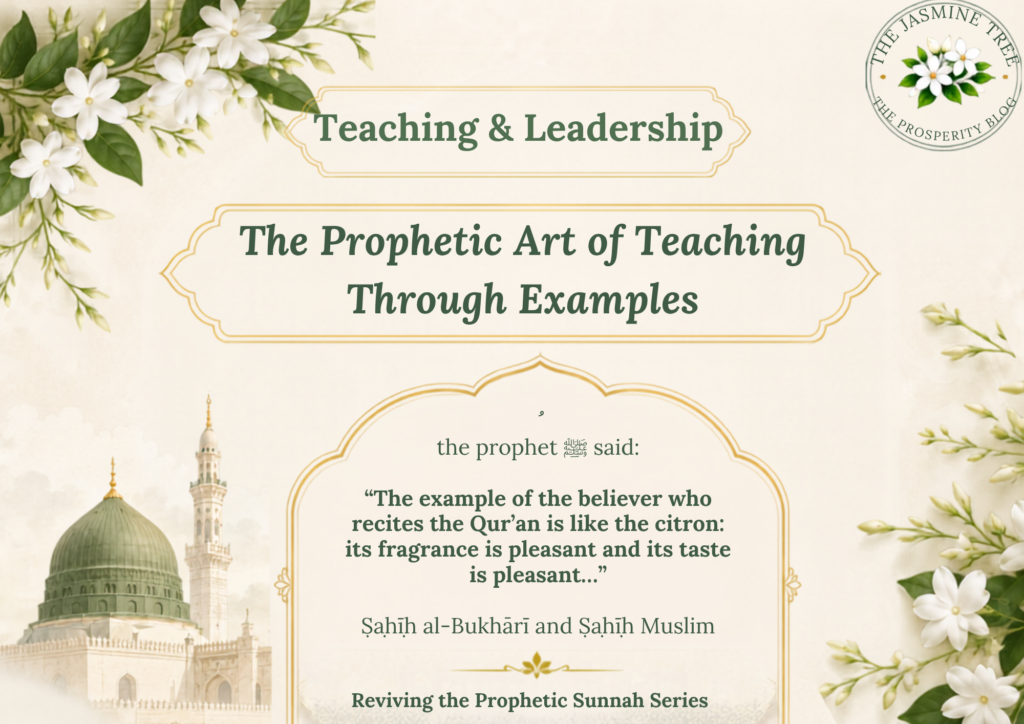
«مَثَلُ الْمُؤْمِنِ الَّذِي يَقْرَأُ الْقُرْآنَ مَثَلُ الْأُتْرُجَّةِ، رِيحُهَا طَيِّبٌ وَطَعْمُهَا طَيِّبٌ…»
“The example of the believer who recites the Qur’an is like the citron: its fragrance is pleasant and its taste is pleasant…”
Ṣaḥīḥ al-Bukhārī and Ṣaḥīḥ Muslim
He then continued the comparison using different plants and fruits to describe different people in relation to faith and Qur’an. Once again, spiritual realities were brought within reach through things people knew from ordinary life. Taste and fragrance became a language through which inward faith and outward benefit could be understood.
One of the richest Prophetic examples for every teacher is his comparison of revelation and knowledge to rain. The Prophet ﷺ said:
«مَثَلُ مَا بَعَثَنِي اللَّهُ بِهِ مِنَ الْهُدَى وَالْعِلْمِ كَمَثَلِ الْغَيْثِ الْكَثِيرِ أَصَابَ أَرْضًا…»
“The example of the guidance and knowledge with which Allah has sent me is like abundant rain that falls upon land…”
Ṣaḥīḥ al-Bukhārī and Ṣaḥīḥ Muslim
He ﷺ then described different kinds of earth. Some received the water and produced abundant vegetation. Some did not produce vegetation themselves but retained the water, so people were able to drink from it, give water to their animals, and irrigate their crops. Other land neither retained the water nor produced vegetation.
The rain was abundant in every case. What differed was the ground upon which it fell.
What a profound image for knowledge and teaching. The teacher may deliver the same lesson to a room full of people, but the lesson does not fall upon identical hearts. One person receives it, understands it, lives by it, and produces good through it. Another retains knowledge and carries it to others. Another may hear the same words and remain almost untouched.
This image also teaches humility to the educator. Not every difference in outcome proves a difference in the truth being taught. Sometimes the rain is the same, while the soil is different. The teacher must therefore know the knowledge, but also learn to recognize the people receiving it—an idea closely connected to the Prophetic principle of teaching people according to their understanding.
When the Prophet ﷺ wanted believers to understand their relationship to one another, he again made an invisible moral obligation visible. He said:
«مَثَلُ الْمُؤْمِنِينَ فِي تَوَادِّهِمْ وَتَرَاحُمِهِمْ وَتَعَاطُفِهِمْ مَثَلُ الْجَسَدِ، إِذَا اشْتَكَى مِنْهُ عُضْوٌ تَدَاعَى لَهُ سَائِرُ الْجَسَدِ بِالسَّهَرِ وَالْحُمَّى»
“The example of the believers in their mutual love, mercy, and compassion is that of one body: when one part of it suffers, the rest of the body responds with sleeplessness and fever.”
Ṣaḥīḥ Muslim
He could have told them simply that Muslims must care for one another, but the image of the body makes indifference difficult to justify. When one part of your own body hurts, the rest does not debate whether the pain concerns it. The whole body responds. In the same way, the suffering of another believer is not something from which the rest of the community should remain emotionally and morally detached.
At another time, the Prophet ﷺ compared believers to a building:
«الْمُؤْمِنُ لِلْمُؤْمِنِ كَالْبُنْيَانِ يَشُدُّ بَعْضُهُ بَعْضًا»
“The believer to another believer is like a building, each part strengthening the other.”
Ṣaḥīḥ al-Bukhārī and Ṣaḥīḥ Muslim
Then he ﷺ interlaced his fingers.
The lesson moved from words, to comparison, to visible demonstration. The Companions did not merely hear about mutual support; they saw separate fingers become joined and strengthened together. This gives the teacher a beautiful progression to remember: say it, compare it, and when possible, show it.
This method is particularly valuable when teaching children. Children often understand concrete images before they can comfortably grasp abstract concepts. Telling a child that good companionship shapes character may be true, but perfume and smoke give the child something to picture. Explaining that prayer repeatedly purifies a believer may be difficult, but a river at the door makes the idea visible. A seed hidden beneath the soil can help introduce the meaning of a good deed whose results are not immediately seen; a plant that needs regular watering can help a child understand why faith needs continual nourishment rather than occasional attention.
The same principle remains valuable with teenagers and adults. The images become more sophisticated, but the mind still learns by connecting what it does not yet understand to what it already knows. A teacher may explain gradual growth through the seasons, consistency through a journey taken step by step, community through a building whose parts support one another, or the effects of repeated habits through paths that become easier to walk the more often they are taken. The purpose is not to make serious knowledge childish. The purpose is to make difficult knowledge accessible without making it shallow.
This is especially important when teaching people whose backgrounds differ from our own. A comparison that is immediately meaningful in one culture may mean little in another. An example drawn from a person’s work, family life, surroundings, language, or ordinary experience may open a door that a technically correct but unfamiliar explanation leaves closed. The wise teacher therefore asks not only, What example do I know? but, What example will this learner understand?
This is also why the Qur’an and Sunnah draw so frequently upon the ordinary world around people. Rain, soil, trees, fruit, perfume, fire, buildings, bodies, roads, trade, light, darkness—these were not distant philosophical abstractions. They belonged to life. The familiar became a bridge to the profound.
Yet examples must be used with care. A comparison is meant to illuminate a particular meaning; it does not necessarily resemble the subject in every respect. If the teacher stretches an analogy beyond the point for which it was given, the example that was supposed to clarify may begin to distort. This caution becomes especially important in matters of creed and the unseen, where human comparisons must never be allowed to define realities beyond what Allah and His Messenger ﷺ have taught.
The example serves the truth; the truth must never be forced to serve the example.
Nor should examples become mere entertainment. A memorable story or clever analogy may capture attention while leaving the learner uncertain about what was actually being taught. The purpose is not that students leave saying, What a beautiful example. The purpose is that the example opens the meaning so clearly that they can now understand, remember, and act upon the truth it was meant to convey.
There is an art to this. The skilled teacher learns to recognize when an explanation has become too abstract, when repetition is no longer helping, and when it is time to stop adding definitions and find a doorway the learner can enter. Sometimes that doorway is a question. Sometimes it is a story. Sometimes it is a comparison. Sometimes it is an object held in the hand, a drawing, a gesture, or something happening immediately before the learner’s eyes.
And sometimes the best example is not prepared beforehand at all. It comes from knowing the learner well enough to recognize what is already familiar to them and then connecting that familiar thing to the new meaning.
This is why teaching through examples belongs to a larger Prophetic understanding of education. First, know the truth you are trying to convey. Then know something of the person before you. Then search for the bridge between what they already understand and what you are trying to help them understand.
The Qur’an gives us seeds, trees, rain, light and darkness, trade and loss, houses and journeys. The Prophet ﷺ gave his Companions rivers, perfume and smoke, fruits and fragrance, rain and soil, buildings and the human body. Through things they already knew, profound truths came within reach.
The wise teacher therefore does not ask only:
How can I explain this?
The better question may be:
What can I connect this meaning to that my learner already understands?
For sometimes the learner does not need more words
They need to see the meaning
فنُّ التعليم بالأمثال والتشبيه في الهدي النبوي
تمرّ بالمعلم أحيانًا لحظات لا تكون المشكلة فيها أن المتعلم يحتاج إلى مزيد من المعلومات، فقد يكون الشرح صحيحًا، والعبارة واضحة، والدرس قد أُعيد مرة بعد مرة، ومع ذلك يبقى المعنى بعيدًا عن الفهم. وفي مثل هذه الحال قد لا تزيد كثرة الكلام الأمر وضوحًا، وقد لا يحتاج المتعلم إلى تعريف آخر أو شرح أطول، وإنما يحتاج إلى صورة يرى بها المعنى
وهذه سمة بارزة من سمات التعليم في القرآن الكريم والهدي النبوي. فالقرآن لا يخاطب العقل بالمعاني المجردة وحدها، بل يقرّبها إلى الناس بما يعرفونه ويشاهدونه: مطر ينزل على أرض ميتة، وشجرة طيبة أصلها ثابت، وظلمات ونور، وتجارة وربح وخسران، ورماد تذروه الرياح، وبيوت ونار وماء وزرع وأسفار وبذور. فينتقل الإنسان مما أبصرته عينه ولمسته يده إلى حقائق لا تقع تحت الحس، ولكن العقل يستطيع أن يدركها والقلب أن يتأثر بها
:قال الله تعالى
(وَتِلْكَ الْأَمْثَالُ نَضْرِبُهَا لِلنَّاسِ لَعَلَّهُمْ يَتَفَكَّرُونَ)
الحشر: 21
:وقال سبحانه
(وَلَقَدْ ضَرَبْنَا لِلنَّاسِ فِي هَٰذَا الْقُرْآنِ مِنْ كُلِّ مَثَلٍ لَعَلَّهُمْ يَتَذَكَّرُونَ)
الزمر: 27
فالمثل إذن ليس زينةً في الكلام، وإنما هو وسيلة من وسائل الفهم، يضع المجهول إلى جانب المعلوم، ويقرّب المعنى المجرد بصورة يألفها الذهن وتحفظها الذاكرة. وربما أدّى المثل المحكم في كلمات قليلة ما لا يؤديه شرح طويل، لأن المتعلم لا يخرج منه بألفاظ تصف المعنى فحسب، بل بصورة ذهنية يستطيع أن يعود إليها كلما أراد استحضاره
وقد استعمل النبي ﷺ هذا الأسلوب في التعليم استعمالًا بديعًا. فلما أراد أن يبيّن لأصحابه أثر الصلوات الخمس في تطهير العبد، لم يبدأ بشرح مجرد عن التطهير :الروحي ومحو الخطايا، وإنما سألهم سؤالًا
«أَرَأَيْتُمْ لَوْ أَنَّ نَهَرًا بِبَابِ أَحَدِكُمْ يَغْتَسِلُ فِيهِ كُلَّ يَوْمٍ خَمْسًا، مَا تَقُولُ ذَلِكَ يُبْقِي مِنْ دَرَنِهِ؟»
:فقالوا: لا يبقي من درنه شيئًا، فقال ﷺ
«فَذَلِكَ مِثْلُ الصَّلَوَاتِ الْخَمْسِ يَمْحُو اللَّهُ بِهَا الْخَطَايَا»
رواه البخاري ومسلم
كان يمكن أن يقال لهم ببساطة: إن الصلوات الخمس تمحو الخطايا، ولكن النبي ﷺ أعطاهم فوق ذلك صورة يحملونها في أذهانهم. جعلهم يتخيلون نهرًا على باب أحدهم، ينزل إليه خمس مرات كل يوم، فيغتسل حتى لا يبقى على جسده شيء من الدرن. وهكذا صار أثر الصلاة في تطهير الروح مفهومًا من خلال أثر الماء في تطهير الجسد، ولم تعد الصلوات الخمس مجرد فرائض تتكرر في اليوم، بل أصبح في الإمكان أن تُرى باعتبارها تطهيرًا متكررًا للنفس من أدرانها
:ومن لطيف تعليمه ﷺ أنه لم يبادرهم بالنتيجة، وإنما بدأ بقوله
«أَرَأَيْتُمْ…»
فأدخلهم في الدرس، وجعلهم يتصورون ويسألون أنفسهم ويجيبون قبل أن يكشف لهم وجه الشبه. فلم يكونوا متلقين للمعلومة فحسب، بل شاركوا في الطريق الذي أوصل إليها. وهذا من دقائق التعليم النافع؛ فليس أفضل مثال دائمًا هو الذي نشرح مغزاه منذ اللحظة الأولى، بل قد يكون أبلغ منه ما يدفع المتعلم إلى أن يكتشف النتيجة بنفسه قبل أن يسمعها من معلمه
وعلى هذا النهج علّم النبي ﷺ أصحابه أثر الصحبة. كان يستطيع أن يطيل في الحديث عن تأثير الأصدقاء والبيئات والعادات وكثرة المخالطة، ولكنه وضع أمامهم :صورتين يعرفونهما جيدًا فقال
«مَثَلُ الْجَلِيسِ الصَّالِحِ وَالسَّوْءِ كَحَامِلِ الْمِسْكِ وَنَافِخِ الْكِيرِ»
رواه البخاري ومسلم
فحامل المسك إما أن يُحذيك، وإما أن تبتاع منه، وإما أن تجد منه ريحًا طيبة، ونافخ الكير إما أن يحرق ثيابك، وإما أن تجد منه ريحًا خبيثة
وهكذا صار لأثر الصحبة رائحة طيبة ودخان، وصار المعنى شيئًا يكاد الإنسان يحسه
قد تدخل مجلسًا لا تريد منه إلا الجلوس، ثم تخرج وقد حملت منه شيئًا. وقد تصاحب إنسانًا من غير أن تقرر يومًا أنك ستقلده، ثم لا تلبث لغته وأولوياته ونظرته إلى الأشياء وعاداته وطريقته في الحكم على الصواب والخطأ أن تترك فيك أثرًا. والمثل هنا يعلّم ما قد لا يؤديه تعريف نظري لمفهوم «تأثير الصحبة» بالقوة نفسها: إن الصحبة تترك في الإنسان شيئًا منها
:واستعمل النبي ﷺ الطعم والرائحة ليقرّب إلى الأذهان اختلاف أحوال الناس مع الإيمان والقرآن فقال
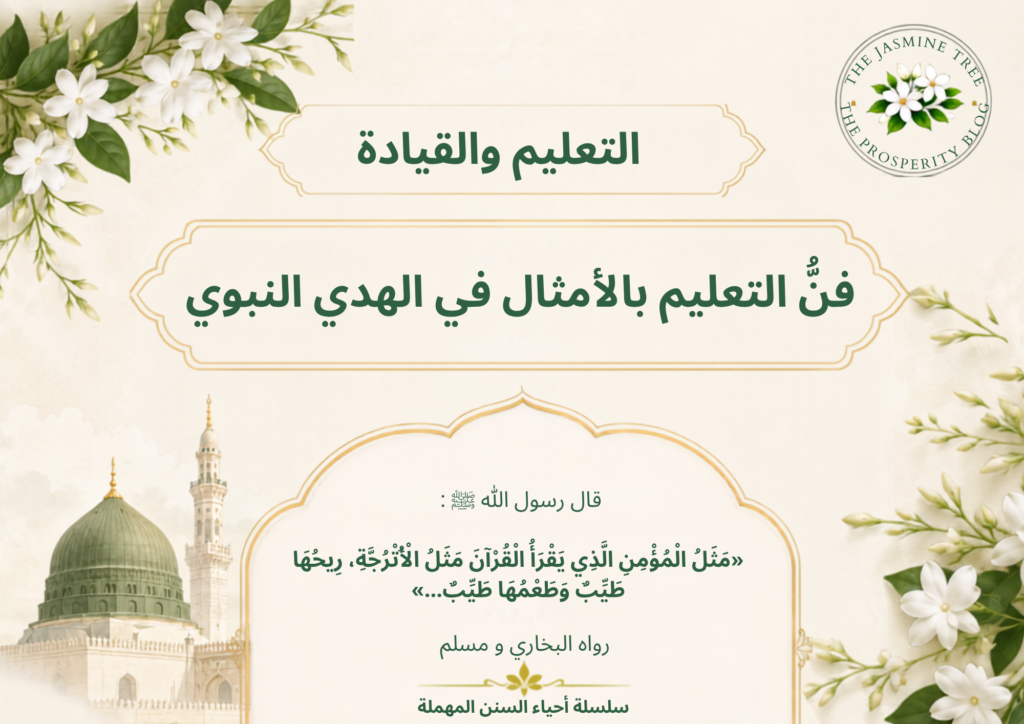
«مَثَلُ الْمُؤْمِنِ الَّذِي يَقْرَأُ الْقُرْآنَ مَثَلُ الْأُتْرُجَّةِ، رِيحُهَا طَيِّبٌ وَطَعْمُهَا طَيِّبٌ…»
رواه البخاري ومسلم
ثم مضى ﷺ يضرب الأمثال بالنبات والثمار ليبيّن اختلاف أحوال الناس في علاقتهم بالإيمان والقرآن. ومرة أخرى أصبحت الحقائق الإيمانية أقرب إلى الإدراك من خلال أشياء يعرفها الناس في حياتهم، وصار للطعم والرائحة قدرة على تقريب معنى الإيمان الباطن وأثره الظاهر
:ومن أغنى أمثاله ﷺ في باب العلم والتعليم تشبيهه ما جاء به من الوحي والعلم بالغيث، فقال
«مَثَلُ مَا بَعَثَنِي اللَّهُ بِهِ مِنَ الْهُدَى وَالْعِلْمِ كَمَثَلِ الْغَيْثِ الْكَثِيرِ أَصَابَ أَرْضًا…»
رواه البخاري ومسلم
ثم وصف ﷺ أنواعًا من الأرض: أرضًا قبلت الماء فأنبتت الكلأ والعشب الكثير، وأرضًا أمسكت الماء فنفع الله بها الناس فشربوا وسقوا وزرعوا، وأرضًا أخرى لا تمسك ماءً ولا تنبت كلأً
الغيث واحد، ولكن الأرض التي استقبلته ليست واحدة
وما أبلغ هذه الصورة في فهم العلم والتعليم. قد يلقي المعلم الدرس نفسه على جماعة من الناس، ولكن كلماته لا تنزل على قلوب متماثلة. فمنهم من يتلقى العلم ويفقهه ويعمل به فيثمر فيه خيرًا، ومنهم من يحفظ العلم ويحمله حتى ينتفع به غيره، ومنهم من يسمع الكلمات نفسها ثم تمر به ولا تكاد تحدث فيه أثرًا
وفي هذا المثل درس في التواضع للمعلم كذلك، فاختلاف الثمرة لا يعني دائمًا اختلاف الحق الذي عُلِّم. فقد يكون المطر واحدًا، ولكن التربة مختلفة. ولذلك لا يكفي أن يعرف المعلم العلم الذي يحمله، بل عليه أن يعرف شيئًا عن النفوس التي تتلقاه، وهذا يتصل اتصالًا وثيقًا بالهدي النبوي في مخاطبة الناس على قدر عقولهم ومعرفة أحوالهم
:وحين أراد النبي ﷺ أن يبين للمؤمنين حقيقة العلاقة التي ينبغي أن تجمع بعضهم ببعض، قرّب هذا الواجب الأخلاقي بصورة يراها الإنسان في نفسه فقال
«مَثَلُ الْمُؤْمِنِينَ فِي تَوَادِّهِمْ وَتَرَاحُمِهِمْ وَتَعَاطُفِهِمْ مَثَلُ الْجَسَدِ، إِذَا اشْتَكَى مِنْهُ عُضْوٌ تَدَاعَى لَهُ سَائِرُ الْجَسَدِ بِالسَّهَرِ وَالْحُمَّى»
رواه مسلم
كان يمكن أن يقال إن على المسلمين أن يهتم بعضهم ببعض، ولكن صورة الجسد تجعل اللامبالاة أمرًا يصعب تبريره. فإذا تألم عضو من جسدك لم تسأل بقية الأعضاء: وما شأننا بألمه؟ بل يستجيب الجسد كله. وكذلك ينبغي ألا يكون ألم المؤمنين ومعاناتهم أمرًا يقف منه بقية المجتمع موقف المتفرج المنفصل عنهم شعورًا ومسؤولية
:وفي موضع آخر شبّه النبي ﷺ المؤمنين بالبنيان فقال
«الْمُؤْمِنُ لِلْمُؤْمِنِ كَالْبُنْيَانِ يَشُدُّ بَعْضُهُ بَعْضًا»
رواه البخاري ومسلم
ثم شبّك ﷺ بين أصابعه
وهنا انتقل الدرس من القول إلى التشبيه، ثم من التشبيه إلى المشاهدة. فلم يسمع الصحابة معنى التآزر فحسب، بل رأوا بأعينهم أصابع متفرقة تتداخل فيقوّي بعضها بعضًا. وفي هذا للمعلم منهج جميل يمكن أن يتذكره: قل المعنى، ثم قرّبه بالمثل، ثم إن استطعت فأرِه للمتعلم
ولهذا الأسلوب أثر عظيم في تعليم الأطفال خاصة، فالطفل كثيرًا ما يفهم الصور المحسوسة قبل أن يتمكن من استيعاب المعاني المجردة. قد تقول له إن الصحبة الصالحة تؤثر في أخلاق الإنسان، وهذه حقيقة، ولكن صورة العطر والدخان تمنحه شيئًا يتخيله. وقد يصعب عليه أن يدرك كيف تطهّر الصلاة قلب الإنسان مرة بعد مرة، ولكن صورة النهر الذي يجري على الباب تجعل المعنى قريبًا منه. ويمكن لبذرة مدفونة تحت التراب أن تقرّب إليه معنى العمل الصالح الذي لا تظهر ثمرته سريعًا، ولنبتة تحتاج إلى السقي باستمرار أن تعينه على فهم حاجة الإيمان إلى التعاهد الدائم، لا إلى العناية العابرة بين حين وآخر
ولا يقتصر هذا الأصل على الأطفال، بل يبقى نافعًا في تعليم الشباب والكبار، وإن اختلفت الأمثلة وازدادت دقة. فقد يشرح المعلم النمو المتدرج بتعاقب الفصول، والثبات والاستمرار برحلة تُقطع خطوة بعد خطوة، وتماسك المجتمع ببناء يشد بعضه بعضًا، وأثر العادات المتكررة بطريق يسهل السير فيه كلما كثرت الأقدام عليه. وليس المقصود أن نجعل العلم الجاد طفوليًا، وإنما أن نجعل العلم الصعب قريبًا من الفهم من غير أن نفرغه من عمقه
ويزداد هذا الأمر أهمية حين نعلّم أناسًا تختلف خلفياتهم عن خلفياتنا. فالمثال الذي يفهمه إنسان في بيئة ما من أول وهلة قد لا يعني شيئًا لمن نشأ في بيئة أخرى. وقد يفتح مثال مأخوذ من عمل المتعلم أو أسرته أو محيطه أو لغته أو تفاصيل حياته اليومية بابًا للفهم يعجز عن فتحه شرح صحيح من الناحية العلمية لكنه غريب عن عالمه. ولذلك لا يسأل المعلم الحكيم نفسه فقط: ما المثال الذي أعرفه؟ بل يسأل: ما المثال الذي سيفهمه هذا المتعلم؟
ومن هنا نفهم شيئًا من كثرة ورود الصور المأخوذة من الحياة في القرآن والسنة: المطر، والأرض، والشجر، والثمر، والمسك، والنار، والبناء، والجسد، والطريق، والتجارة، والنور، والظلمة. لم تكن هذه صورًا فلسفية بعيدة عن حياة الناس، بل كانت مما يعيشونه ويرونه ويعرفونه، فأصبح المألوف جسرًا يعبرون عليه إلى المعاني العميقة
غير أن استعمال الأمثال والتشبيهات يحتاج إلى فقه ودقة. فالمثل إنما يُضرب لتوضيح معنى معين، ولا يلزم أن يكون المشبَّه والمشبَّه به متماثلين من كل وجه. فإذا تجاوز المعلم بالمثال الحد الذي سيق من أجله، فقد يتحول ما أراد به التوضيح إلى سبب للخلط والتشويه. ويتأكد هذا الحذر في مسائل العقيدة وأمور الغيب، فلا يجوز أن نجعل التشبيهات البشرية حاكمة على حقائق لم يخبرنا الله ورسوله ﷺ عنها إلا بقدر معلوم
فالمثل في خدمة الحق، وليس الحق في خدمة المثل
كما ينبغي ألا تتحول الأمثال إلى مجرد وسيلة للإمتاع. فقد تبقى القصة الطريفة أو الصورة الذكية في ذاكرة المتعلم، ثم يخرج وهو لا يدري ما الذي كان ينبغي أن يتعلمه منها. وليس المقصود أن يقول الطلاب بعد الدرس: ما أجمل هذا المثال، وإنما أن يفتح لهم المثال باب المعنى حتى يفهموا الحق الذي سيق من أجله، ويحفظوه، ثم يعملوا به
وهذا باب من أبواب فن التعليم. فالمعلم الماهر يتعلم أن يعرف متى أصبح الشرح مجردًا أكثر مما ينبغي، ومتى لم تعد إعادة الكلام تنفع، ومتى ينبغي له أن يتوقف عن إضافة التعريفات ويبحث عن باب آخر يدخل منه المتعلم إلى المعنى. قد يكون ذلك الباب سؤالًا، وقد يكون قصة، أو مثلًا، أو مقارنة، أو شيئًا يمسكه بيده، أو رسمًا، أو حركة، أو مشهدًا يقع أمام المتعلم في اللحظة نفسها
وقد يكون أفضل مثال أحيانًا ما لم يُعَدّ له مسبقًا، وإنما يولد من معرفة المعلم بالمتعلم، ومن قدرته على إدراك ما يألفه ويفهمه، ثم وصل ذلك المألوف بالمعنى الجديد الذي يريد أن يوصله إليه
ولهذا فإن التعليم بالأمثال جزء من فهم نبوي أوسع للتربية والتعليم. اعرف أولًا الحق الذي تريد إيصاله، ثم اعرف شيئًا عن الإنسان الذي أمامك، ثم ابحث عن الجسر الذي يصل بين ما يعرفه بالفعل وما تريد أن تعينه على معرفته
لقد ضرب لنا القرآن الأمثال بالبذور والأشجار والمطر والنور والظلمة والتجارة والخسران والبيوت والأسفار، وضرب النبي ﷺ لأصحابه الأمثال بالأنهار والمسك والدخان والثمار والروائح والمطر والأرض والبنيان والجسد، فصارت المعاني العميقة قريبة من العقول بما عرفه الناس وألفوه
:ولهذا لا ينبغي أن يكون سؤال المعلم دائمًا
كيف أشرح هذا؟
:بل لعل السؤال الأجدى أن يكون
بماذا أستطيع أن أصل هذا المعنى مما يعرفه المتعلم ويفهمه؟
فقد لا يحتاج المتعلم دائمًا إلى مزيد من الكلام
قد يحتاج فقط إلى أن يرى المعنى
