
It is easy to tell people what they should do. It is easy to speak about patience, discipline, mercy, honesty, worship, sacrifice, and good character. But real teaching begins at the moment when the listener quietly asks: Do I see this in the person teaching me? Do they live what they are asking me to live?
Human beings do not learn through hearing alone. They also learn through watching, and often what they repeatedly see settles more deeply than what they are told many times. A teacher may speak beautifully about patience, but students will remember how she behaved when one of them made a mistake. A parent may constantly emphasize prayer, but children notice what happens when their parents are tired, busy, or distracted. A leader may speak about sacrifice and commitment, yet the people around that leader naturally look first at how much of the burden the leader is willing to carry personally.
This is why the words of Prophet Shuʿayb عليه السلام contain such a powerful educational principle:
(وَمَا أُرِيدُ أَنْ أُخَالِفَكُمْ إِلَىٰ مَا أَنْهَاكُمْ عَنْهُ ۚ إِنْ أُرِيدُ إِلَّا الْإِصْلَاحَ مَا اسْتَطَعْتُ ۚ وَمَا تَوْفِيقِي إِلَّا بِاللَّهِ)
“I do not wish to contradict you by doing what I forbid you from. I only desire reform as much as I am able, and my success is only through Allah.”
The meaning is clear and demanding: I will not warn you away from a road while walking it myself. I will not call you toward reform while refusing to let that reform begin with me.
That is where the sincerity of the teacher begins. The educator should be the first person affected by the lesson, the first to submit to the standard being taught, and the first to struggle toward the path being recommended to others.
The Prophet ﷺ did not teach his Companions through words alone. His actions were themselves part of the curriculum. When teaching prayer, he said:
«صَلُّوا كَمَا رَأَيْتُمُونِي أُصَلِّي»
“Pray as you have seen me pray.”
He did not leave them with a theoretical description. They watched him stand, bow, prostrate, sit, recite, and complete the prayer. The lesson was visible before their eyes. His Companions then carried the same method forward. When ʿUthmān ibn ʿAffān رضي الله عنه wanted to teach wuḍūʾ, he called for water and performed the ablution in front of the people, then explained that he had seen the Messenger of Allah ﷺ do it that way. Knowledge passed from one generation to the next not only through narration, but through demonstration.
One of the most powerful examples of this Prophetic method appeared at al-Ḥudaybiyyah. The Companions had traveled hoping to enter Makkah and perform ʿUmrah, but the outcome was a treaty that weighed heavily on them. The Prophet ﷺ instructed them to slaughter their sacrificial animals and shave their heads. Yet they were so overcome by disappointment that they remained still. He repeated the command, but they did not move.
When he entered upon Umm Salamah رضي الله عنها and told her what had happened, she advised him to go out, say nothing further, slaughter his own animal, and shave his head. So he did.
Then the narration says:
«فَلَمَّا رَأَوْا ذَلِكَ قَامُوا فَنَحَرُوا»
“When they saw that, they rose and slaughtered.”
They had already heard the instruction. But when they saw the Prophet ﷺ begin with himself, something changed. No further speech was needed. What repeated words had not accomplished, one visible action accomplished immediately.
That moment should remain in the mind of every parent, teacher, mentor, and leader. Sometimes people do not need another lecture. They need to see the lesson embodied.
The same principle appeared whenever the work was difficult. During the digging of the Trench, the Prophet ﷺ did not stand at a distance directing exhausted men. Al-Barāʾ ibn ʿĀzib رضي الله عنه said:
«رَأَيْتُ النَّبِيَّ ﷺ يَوْمَ الْخَنْدَقِ يَنْقُلُ مَعَنَا التُّرَابَ»
“I saw the Prophet ﷺ on the Day of the Trench carrying earth with us.”
He carried what they carried. He experienced the same dust and fatigue. When the Prophet’s Mosque was being built, he carried bricks alongside his Companions. He could have simply instructed others, but he participated.
Another form of teaching by example appears in the way the Prophet ﷺ corrected religious excess. He did not merely tell people that extremism was wrong; he pointed to his own lived practice as the standard.
Three men once asked about the Prophet’s ﷺ worship. When they were told about it, they seemed to consider it too little for themselves. One said that he would pray all night without sleeping. Another said that he would fast continuously without breaking his fast. A third said that he would abstain from marriage altogether.
When the Prophet ﷺ heard of this, he said:
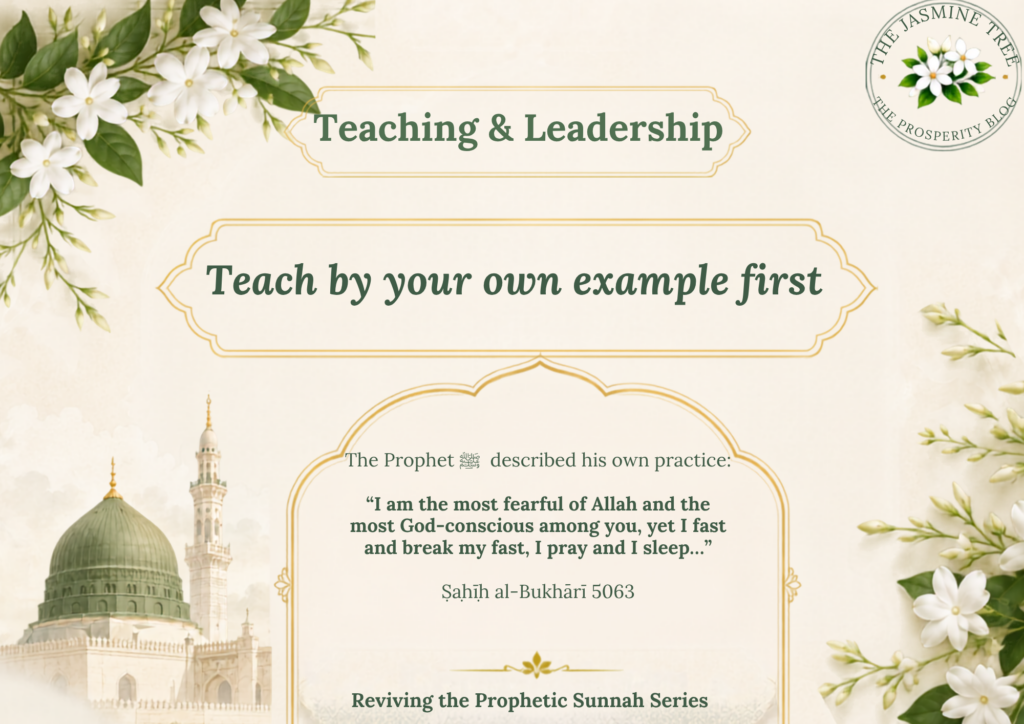
«أَنْتُمُ الَّذِينَ قُلْتُمْ كَذَا وَكَذَا؟ أَمَا وَاللَّهِ إِنِّي لَأَخْشَاكُمْ لِلَّهِ وَأَتْقَاكُمْ لَهُ، لَكِنِّي أَصُومُ وَأُفْطِرُ، وَأُصَلِّي وَأَرْقُدُ، وَأَتَزَوَّجُ النِّسَاءَ، فَمَنْ رَغِبَ عَنْ سُنَّتِي فَلَيْسَ مِنِّي»
“Are you the ones who said such-and-such? By Allah, I am the most fearful of Allah among you and the most God-conscious of Him, yet I fast and I break my fast, I pray and I sleep, and I marry women. Whoever turns away from my Sunnah is not from me.”
Ṣaḥīḥ al-Bukhārī, 5063
He did not simply say, “Do not go to extremes.” He presented his own life as the explanation of what balanced devotion looks like.
He ﷺ was the most God-conscious of them, yet his worship did not destroy balance. He fasted, but he also ate. He prayed at night, but he also slept. He devoted himself to Allah while still fulfilling the rights of family, body, and community.
This reveals another essential dimension of role modeling: the teacher’s life interprets the lesson.
If a teacher speaks about balance but lives in excess, the lesson is weakened. If a parent speaks about moderation but neglects family, health, or responsibility, the contradiction becomes visible. If a leader teaches sustainable service but constantly burns out and expects others to do the same, the example undermines the message.
The Prophet ﷺ did not only teach moderation with words. His life itself was the proof.
There is a profound difference between a leader who says, “Work harder,” and a leader who is already working beside you. There is a difference between someone who demands sacrifice and someone who has already begun sacrificing. People may obey authority, but they are moved by integrity.
The Prophetic example was no less visible at home. When ʿĀʾishah رضي الله عنها was asked what the Prophet ﷺ did in his house, she said:
«كَانَ فِي مِهْنَةِ أَهْلِهِ»
“He used to serve his family.”
The Messenger of Allah ﷺ, who led a community, taught revelation, received delegations, judged between people, and carried enormous responsibility, entered his home and served his family.
And he said:
«خَيْرُكُمْ خَيْرُكُمْ لِأَهْلِهِ، وَأَنَا خَيْرُكُمْ لِأَهْلِي»
“The best of you are those who are best to their families, and I am the best of you to my family.”
He did not establish a standard from outside it. He lived within it.
This matters deeply in parenting. Children do not learn only from direct instruction. They observe how their parents speak to their own parents, how they treat one another, whether they apologize, whether they control their anger, whether they keep promises, whether prayer remains important when they are tired, whether they speak kindly about people in their absence, and whether they put down the phone when someone needs their attention.
A child may forget many lectures, but rarely forgets the moral atmosphere of the home.
The home is always teaching, even when no formal lesson is taking place.
The Prophet ﷺ also taught gratitude through the way he worshipped. He stood in prayer at night until his feet became swollen. When asked why he exerted himself so much, he replied:
«أَفَلَا أَكُونُ عَبْدًا شَكُورًا؟»
“Should I not be a grateful servant?”
Gratitude was not merely something he defined. His Companions saw what gratitude looked like when the night became quiet and a servant stood before his Lord.
Likewise, Ibn ʿAbbās رضي الله عنهما said:
«كَانَ رَسُولُ اللَّهِ ﷺ أَجْوَدَ النَّاسِ»
“The Messenger of Allah ﷺ was the most generous of people.”
He taught generosity while being generous. He taught mercy while showing mercy. He taught patience while enduring. He taught forgiveness while forgiving. He taught humility while living humbly.
His teachings did not float above his life as ideals disconnected from reality. They were visible within it.
This is why ʿĀʾishah رضي الله عنها, when asked about his character, gave the extraordinary answer:
«كَانَ خُلُقُهُ الْقُرْآنَ»
“His character was the Qur’an.”
The Qur’an was heard from his tongue, but it could also be seen in his conduct. Its mercy appeared in his mercy, its justice in his justice, its patience in his patience, its forgiveness in his forgiveness, its humility in his humility, and its devotion in his worship.
This is perhaps the highest form of teaching: when knowledge becomes character.
The Companions understood this principle deeply. A woman once challenged ʿAbdullāh ibn Masʿūd رضي الله عنه about something he prohibited and suggested that perhaps women in his own household were doing the same. She was allowed to look, and found nothing that contradicted what he had taught. Ibn Masʿūd then invoked the words of Shuʿayb عليه السلام:
(وَمَا أُرِيدُ أَنْ أُخَالِفَكُمْ إِلَىٰ مَا أَنْهَاكُمْ عَنْهُ)
“I do not wish to contradict you by doing what I forbid you from. “
His message was clear: I will not hold you to a standard while excusing my own household from it.
ʿUmar ibn al-Khaṭṭāb رضي الله عنه understood the same reality. When he prohibited something publicly, he would pay particular attention to his own family because he knew people watched the household of the leader closely. If those closest to the leader disregarded the standard, others would quickly feel free to do the same.
This is why the Qur’an warns so strongly against the opposite:
(أَتَأْمُرُونَ النَّاسَ بِالْبِرِّ وَتَنْسَوْنَ أَنْفُسَكُمْ)
“Do you command people to righteousness and forget yourselves?”
And:
(يَا أَيُّهَا الَّذِينَ آمَنُوا لِمَ تَقُولُونَ مَا لَا تَفْعَلُونَ كَبُرَ مَقْتًا عِنْدَ اللَّهِ أَنْ تَقُولُوا مَا لَا تَفْعَلُونَ)
“O you who believe, why do you say what you do not do? Greatly hateful it is to Allah that you say what you do not do.”
The Prophet ﷺ also warned about the person who commands others to do good but does not do it himself, and who forbids evil while practicing it.
Knowledge is not merely something we deliver to others. It first makes a demand upon us.
Yet this does not mean a person must become perfect before teaching. If perfection were required, no one would ever teach anyone. Every parent, teacher, scholar, mentor, and leader has weaknesses. The issue is not whether we have shortcomings. The issue is whether we are honestly struggling in the same direction as the lesson we teach.
There is a great difference between saying, “I struggle with this too, and I am trying to improve alongside you,” and living as though the standard applies to everyone except yourself.
The sincere teacher remains a student of the lesson being taught.
If you teach patience, examine your anger.
If you teach humility, examine your ego.
If you teach discipline, begin with your own habits.
If you teach generosity, ask where you yourself are withholding.
If you speak about forgiveness, examine the grudges you still carry.
Every lesson should move in two directions: outward toward the student and inward toward the teacher.
Every teacher also has two curricula. One is the curriculum intentionally spoken. The other is the curriculum people quietly read in the teacher’s conduct.
You may teach respect with your words and undermine it with your tone. You may speak about patience while displaying constant irritation. You may teach mercy and then humiliate a struggling student. You may speak about humility while needing constant praise. You may teach good character while speaking harshly about anyone who disagrees with you.
Sometimes the silent curriculum becomes stronger than the spoken one.
That is why the educator must ask not only, “What am I teaching?” but also, “What are people learning from watching me?”
For parents, that question is especially urgent because children learn from the moments adults do not plan. They watch us in traffic, in disagreement, under pressure, after a mistake, when someone asks us for help, when prayer time arrives in the middle of a busy day, when we are tired, when we are disappointed, and when no one is applauding us.
These are all moments of tarbiyah.
Sometimes the strongest sentence a parent can say is not, “Go and do it,” but:
“Come, let us do it together.”
Let us pray together.
Let us read together.
Let us apologize together.
Let us give charity together.
Let us serve together.
Let us repair the mistake together.
Education through companionship is often stronger than education from a distance.
The same is true in leadership. The Trench still teaches. The building of the Prophet’s Mosque still teaches. Al-Ḥudaybiyyah still teaches.
Do not ask people for a sacrifice whose cost you refuse to understand.
Do not demand accountability while considering yourself above it.
Do not speak about punctuality while wasting other people’s time.
Do not celebrate service while behaving as though service is beneath you.
People may comply with authority, but they are inspired by sincerity.
And there are moments when the strongest lesson is almost wordless. At al-Ḥudaybiyyah, the Prophet ﷺ had already spoken. Then he acted, and everyone moved.
There will be moments when the advice has already been given, the explanation has already been repeated, and the rule is already known. At that point the question may no longer be, “What else should I say?”
The better question may be:
What do they need to see from me?
Before speaking about prayer, strengthen your own prayer.
Before teaching gentleness, soften your own speech.
Before asking for discipline, discipline yourself.
Before teaching generosity, give.
Before speaking about service, serve.
Before asking for sacrifice, be willing to sacrifice.
Before correcting the character of others, examine your own.
Before calling people toward Allah, keep repairing your own relationship with Him.
Do not wait for perfection. It will not come.
But let your life move in the same direction as your words.
The most powerful sermon is not always spoken, and the deepest lesson is not always explained.
Sometimes the greatest lesson you can give people is simply this:
that they can see in you something of the good you are calling them toward.
ابدأ بنفسك: التربية بالقدوة
من السهل أن تخبر الناس بما ينبغي عليهم أن يفعلوه، ومن السهل أن تتحدث عن الصبر والانضباط والرحمة والصدق والعبادة والتضحية وحسن الخلق، ولكن التعليم الحقيقي يبدأ في اللحظة التي يسأل فيها المتلقي في نفسه بهدوء: هل أرى هذا فيمن يعلّمني؟ وهل يعيش هو ما يطلب مني أن أعيشه؟
فالإنسان لا يتعلم بالسماع وحده، بل يتعلم كذلك بالمشاهدة، وكثيرًا ما يستقر ما يراه مرارًا في نفسه أعمق مما يسمعه مرارًا. قد يتحدث المعلّم حديثًا بليغًا عن الصبر، ولكن طلابه سيتذكرون كيف تصرف حين أخطأ أحدهم، وقد يكثر الأب أو الأم من التأكيد على الصلاة، ولكن الأبناء يلاحظون ماذا يحدث حين يكون الوالدان متعبين أو مشغولين أو مشتتين، وقد يتحدث القائد عن التضحية والالتزام، ولكن من حوله ينظرون بطبيعتهم أولًا إلى مقدار ما يتحمله هو بنفسه من العبء الذي يطلب منهم أن يحملوه
:ولهذا تحمل كلمات نبي الله شعيب عليه السلام أصلًا تربويًا عظيمًا
(وَمَا أُرِيدُ أَنْ أُخَالِفَكُمْ إِلَىٰ مَا أَنْهَاكُمْ عَنْهُ ۚ إِنْ أُرِيدُ إِلَّا الْإِصْلَاحَ مَا اسْتَطَعْتُ ۚ وَمَا تَوْفِيقِي إِلَّا بِاللَّهِ)
والمعنى واضح، ولكنه شديد في ميزان المسؤولية: لن أنهاكم عن طريق ثم أسلكه أنا، ولن أدعوكم إلى الإصلاح وأنا أرفض أن يبدأ هذا الإصلاح بي. ومن هنا يبدأ صدق المعلّم، فالمربّي ينبغي أن يكون أول من يتأثر بالدرس، وأول من يخضع للميزان الذي يعلّمه، وأول من يجاهد نفسه في سلوك الطريق الذي يدعو الآخرين إليه
:ولم يكن النبي ﷺ يعلّم أصحابه بالكلمات وحدها، بل كانت أفعاله نفسها جزءًا من التعليم. فلما علّمهم الصلاة قال
«صَلُّوا كَمَا رَأَيْتُمُونِي أُصَلِّي»
فلم يترك لهم وصفًا نظريًا فحسب، بل رأوه يقوم ويركع ويسجد ويجلس ويقرأ ويتم صلاته، فكان الدرس ماثلًا أمام أعينهم. ثم حمل أصحابه هذا المنهج من بعده، فلما أراد عثمان بن عفان رضي الله عنه أن يعلّم الناس الوضوء، دعا بماء فتوضأ أمامهم، ثم أخبرهم أنه رأى رسول الله ﷺ يتوضأ على ذلك النحو. وهكذا انتقل العلم من جيل إلى جيل، لا بالرواية وحدها، وإنما بالتطبيق والمشاهدة أيضًا
ومن أقوى الأمثلة على هذا المنهج النبوي ما وقع يوم الحديبية. فقد خرج الصحابة رضي الله عنهم وهم يرجون دخول مكة وأداء العمرة، ولكن الأمر انتهى إلى صلح ثقل عليهم وشق على نفوسهم. فأمرهم النبي ﷺ أن ينحروا هديهم ويحلقوا رؤوسهم، ولكن شدة ما غلب عليهم من الحزن وخيبة الأمل جعلتهم يبقون في أماكنهم، فكرر عليهم الأمر، ومع ذلك لم يتحركوا
فلما دخل النبي ﷺ على أم سلمة رضي الله عنها وأخبرها بما حدث، أشارت عليه أن يخرج إليهم، وألا يقول لهم شيئًا آخر، وأن ينحر هديه بنفسه ويحلق رأسه، ففعل ﷺ
:وجاء في الرواية
«فَلَمَّا رَأَوْا ذَلِكَ قَامُوا فَنَحَرُوا»
لقد كانوا قد سمعوا الأمر من قبل، ولكن حين رأوا النبي ﷺ يبدأ بنفسه تغير شيء في نفوسهم، ولم تعد هناك حاجة إلى مزيد من الكلام. فما لم تستطع الكلمات المتكررة أن تحققه، حققه فعل واحد رأوه أمام أعينهم. وهذا موقف ينبغي أن يبقى حاضرًا في ذهن كل أب وأم، وكل معلّم ومربٍّ وقائد، لأن الناس لا يحتاجون دائمًا إلى محاضرة أخرى، بل قد يحتاجون إلى أن يروا الدرس متجسدًا أمامهم
وظهر الأصل نفسه كلما اشتد العمل وثقلت المشقة. ففي حفر الخندق لم يقف النبي ﷺ بعيدًا يوجّه رجالًا أنهكهم التعب، بل كان يعمل معهم، حتى قال البراء بن :عازب رضي الله عنه
«رَأَيْتُ النَّبِيَّ ﷺ يَوْمَ الْخَنْدَقِ يَنْقُلُ مَعَنَا التُّرَابَ»
فحمل ما حملوه، وعانى معهم الغبار والتعب، وحين بُني مسجد النبي ﷺ كان يحمل اللبن مع أصحابه. كان يستطيع أن يكتفي بتوجيه الآخرين، ولكنه شاركهم العمل بنفسه
ويظهر وجه آخر من وجوه التعليم بالقدوة في الطريقة التي صحح بها النبي ﷺ الغلو في الدين. فلم يكتف بأن يخبر الناس أن الغلو خطأ، وإنما أشار إلى هديه العملي وجعل حياته نفسها ميزانًا يُعرف به الاعتدال في العبادة
فقد جاء ثلاثة نفر يسألون عن عبادة النبي ﷺ، فلما أُخبروا بها كأنهم تقالّوها، فقال أحدهم إنه سيقوم الليل كله ولا ينام، وقال الآخر إنه سيصوم الدهر ولا يفطر، وقال الثالث إنه سيعتزل النساء فلا يتزوج أبدًا
:فلما بلغ ذلك النبي ﷺ قال
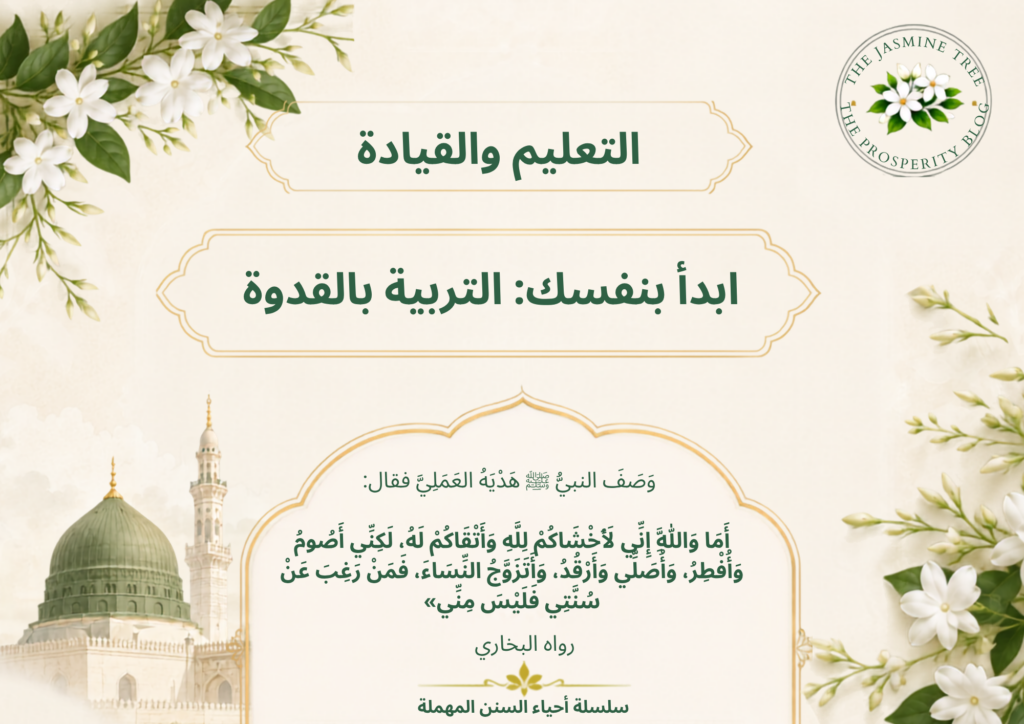
«أَنْتُمُ الَّذِينَ قُلْتُمْ كَذَا وَكَذَا؟ أَمَا وَاللَّهِ إِنِّي لَأَخْشَاكُمْ لِلَّهِ وَأَتْقَاكُمْ لَهُ، لَكِنِّي أَصُومُ وَأُفْطِرُ، وَأُصَلِّي وَأَرْقُدُ، وَأَتَزَوَّجُ النِّسَاءَ، فَمَنْ رَغِبَ عَنْ سُنَّتِي فَلَيْسَ مِنِّي»
صحيح البخاري،
فلم يقل لهم ببساطة: لا تغلوا، بل جعل حياته نفسها بيانًا لما تكون عليه العبادة المتوازنة. كان ﷺ أخشاهم لله وأتقاهم له، ومع ذلك لم تهدم عبادته ميزان الحياة، فكان يصوم ويفطر، ويقوم الليل وينام، ويتفرغ لعبادة الله مع أداء حقوق الأهل والجسد والمجتمع. وهذا يكشف بعدًا آخر أساسيًا في التربية بالقدوة: حياة المعلّم تفسّر الدرس الذي يعلّمه
فإذا تحدث المعلّم عن التوازن ثم عاش الغلو، ضعف الدرس، وإذا تحدث الأب أو الأم عن الاعتدال ثم أهمل الأسرة أو الصحة أو المسؤوليات، ظهر التناقض، وإذا علّم القائد الناس معنى الخدمة المستدامة ثم ظل يستنزف نفسه حتى الانهيار ويتوقع من الآخرين أن يفعلوا مثله، هدمت القدوة الرسالة التي يحملها. أما النبي ﷺ فلم يعلّم الاعتدال بالكلمات وحدها، بل كانت حياته نفسها الدليل عليه
وثمة فرق عميق بين قائد يقول: اعملوا أكثر، وقائد يعمل إلى جوار الناس، وبين من يطالب الآخرين بالتضحية ومن سبقهم إلى التضحية. قد يطيع الناس صاحب السلطة، ولكن الذي يحركهم حقًا هو النزاهة وصدق العمل
:ولم تكن القدوة النبوية أقل ظهورًا داخل البيت. فقد سئلت عائشة رضي الله عنها عما كان النبي ﷺ يصنع في بيته فقالت
«كَانَ فِي مِهْنَةِ أَهْلِهِ»
أي كان في خدمة أهله
فرسول الله ﷺ، الذي كان يقود أمة، ويعلّم الوحي، ويستقبل الوفود، ويحكم بين الناس، ويحمل مسؤوليات عظيمة، كان يدخل بيته فيخدم أهله
:وقال ﷺ
«خَيْرُكُمْ خَيْرُكُمْ لِأَهْلِهِ، وَأَنَا خَيْرُكُمْ لِأَهْلِي»
فلم يضع معيارًا يقف هو خارجه، وإنما عاش داخل المعيار الذي دعا الناس إليه
وهذا المعنى بالغ الأهمية في تربية الأبناء، لأن الأطفال لا يتعلمون بالتوجيه المباشر وحده، بل يراقبون كيف يعامل آباؤهم وأمهاتهم والديهم، وكيف يعامل الأبوان بعضهما بعضًا، وهل يعتذران إذا أخطآ، وهل يملكان غضبهما، وهل يفيان بوعودهما، وهل تبقى الصلاة مهمة حين يكونان متعبين، وهل يحفظان ألسنتهما عن الناس في غيابهم، وهل يضعان الهاتف جانبًا حين يحتاج إليهما إنسان. قد ينسى الطفل كثيرًا من المواعظ، ولكنه قلّ أن ينسى الجو الأخلاقي الذي عاش فيه داخل بيته، فالبيت يعلّم دائمًا، حتى حين لا يكون فيه درس مقصود
:وعلّم النبي ﷺ الشكر كذلك بالطريقة التي عبد بها ربه. فقد كان يقوم من الليل حتى تتورم قدماه، فلما سئل لماذا يحمل نفسه على كل ذلك قال
«أَفَلَا أَكُونُ عَبْدًا شَكُورًا؟»
فلم يكن الشكر معنى يعرّفه للناس بالكلمات فحسب، بل رأى أصحابه كيف يبدو الشكر حين يسكن الليل ويقف العبد بين يدي ربه
:وكذلك قال ابن عباس رضي الله عنهما
«كَانَ رَسُولُ اللَّهِ ﷺ أَجْوَدَ النَّاسِ»
فكان يعلّم الجود وهو يجود، ويعلّم الرحمة وهو يرحم، ويعلّم الصبر وهو يصبر، ويعلّم العفو وهو يعفو، ويعلّم التواضع وهو يعيش متواضعًا. لم تكن تعاليمه ﷺ مُثلًا معلقة فوق حياته منفصلة عن الواقع، وإنما كانت ظاهرة فيها
:ولهذا لما سئلت عائشة رضي الله عنها عن خُلُقه قالت تلك الكلمة العظيمة
«كَانَ خُلُقُهُ الْقُرْآنَ»
فالقرآن كان يُسمع من لسانه، ولكنه كان يُرى كذلك في سلوكه؛ ظهرت رحمته في رحمته، وعدالته في عدله، وصبره في صبره، وعفوه في عفوه، وتواضعه في تواضعه، وعبوديته في عبادته. ولعل هذه أعلى صور التعليم: أن يتحول العلم إلى خُلُق
وقد فهم الصحابة رضي الله عنهم هذا الأصل فهمًا عميقًا. فقد اعترضت امرأة على عبد الله بن مسعود رضي الله عنه في أمر كان ينهى عنه، وأشارت إلى احتمال :أن تكون نساء بيته يفعلن الشيء نفسه، فأُذن لها أن تنظر، فلم تجد في بيته ما يخالف ما كان يعلّمه، فاستشهد ابن مسعود بقول شعيب عليه السلام
(وَمَا أُرِيدُ أَنْ أُخَالِفَكُمْ إِلَىٰ مَا أَنْهَاكُمْ عَنْهُ)
وكان معنى موقفه واضحًا: لا أطالبكم بمعيار ثم أعفي أهل بيتي منه
وفهم عمر بن الخطاب رضي الله عنه الحقيقة نفسها، فكان إذا نهى الناس عن أمر أولى أهل بيته عناية خاصة، لأنه كان يعلم أن الناس يراقبون بيت القائد عن كثب، وأن أقرب الناس إلى القائد إذا استهانوا بالمعيار الذي وضعه، سارع الآخرون إلى الشعور بأن لهم أن يفعلوا الشيء نفسه
:ولهذا جاء تحذير القرآن شديدًا من النقيض
(أَتَأْمُرُونَ النَّاسَ بِالْبِرِّ وَتَنْسَوْنَ أَنْفُسَكُمْ)
:وقال تعالى
(يَا أَيُّهَا الَّذِينَ آمَنُوا لِمَ تَقُولُونَ مَا لَا تَفْعَلُونَ كَبُرَ مَقْتًا عِنْدَ اللَّهِ أَنْ تَقُولُوا مَا لَا تَفْعَلُونَ)
وحذر النبي ﷺ كذلك من الإنسان الذي يأمر غيره بالمعروف ولا يأتيه، وينهاهم عن المنكر ثم يفعله هو. فالعلم ليس مجرد شيء نحمله إلى الآخرين، وإنما يطالبنا نحن أولًا قبل أن نطالب به غيرنا
ومع ذلك، لا يعني هذا أن الإنسان يجب أن يبلغ الكمال قبل أن يعلّم. فلو كان الكمال شرطًا للتعليم، لما استطاع أحد أن يعلّم أحدًا. وكل أب وأم، وكل معلّم وعالم ومربٍّ وقائد، له جوانب من الضعف والتقصير. وليست القضية أن نكون بلا نقص، وإنما أن نكون صادقين في مجاهدة أنفسنا في الاتجاه نفسه الذي يشير إليه الدرس الذي نعلّمه. وثمة فرق عظيم بين من يقول: أنا أيضًا أجاهد نفسي في هذا، وأسعى إلى أن أصلحه معكم، وبين من يعيش وكأن المعيار الذي يضعه لا ينطبق إلا على الآخرين
فالمعلّم الصادق يظل تلميذًا للدرس الذي يعلّمه
فإذا كنت تعلّم الصبر، فانظر في غضبك، وإذا كنت تعلّم التواضع، فانظر في نفسك وما تطلبه من حظها، وإذا كنت تعلّم الانضباط، فابدأ بعاداتك أنت، وإذا كنت تعلّم الجود، فاسأل نفسك أين تمسك يدك، وإذا كنت تتحدث عن العفو، فانظر في الضغائن التي ما زلت تحملها. وهكذا ينبغي لكل درس أن يسير في اتجاهين معًا: إلى الخارج نحو المتعلم، وإلى الداخل نحو المعلّم
ولكل معلّم في الحقيقة منهجان؛ أحدهما المنهج الذي يتعمد أن ينطق به، والآخر منهج يقرؤه الناس بصمت في سلوكه. فقد تعلّم الاحترام بكلماتك ثم تهدمه بنبرة صوتك، وقد تتحدث عن الصبر بينما يظهر منك الضجر باستمرار، وقد تعلّم الرحمة ثم تهين طالبًا يعاني أو يتعثر، وقد تتحدث عن التواضع بينما تحتاج دائمًا إلى الثناء، وقد تعلّم حسن الخلق ثم تتحدث بقسوة عن كل من يخالفك. وفي بعض الأحيان يصبح هذا المنهج الصامت أقوى من المنهج المنطوق، ولذلك لا يكفي أن يسأل المربّي نفسه: ماذا أعلّم؟ بل ينبغي أن يسأل أيضًا: ماذا يتعلم الناس وهم يراقبونني؟
وهذا السؤال أشد إلحاحًا عند الوالدين، لأن الأبناء يتعلمون من اللحظات التي لا يخطط الكبار فيها لتعليمهم. إنهم يراقبوننا في الطريق، وفي أثناء الخلاف، وتحت الضغط، وبعد أن نخطئ، وحين يطلب منا أحد المساعدة، وحين يدخل وقت الصلاة في وسط يوم مزدحم، وحين نتعب، وحين تخيب آمالنا، وحين لا يصفق لنا أحد. وكل واحدة من هذه اللحظات لحظة تربية
وقد تكون أقوى عبارة يستطيع الأب أو الأم أن يقولاها أحيانًا ليست: اذهب وافعل ذلك، وإنما: تعال، لنفعله معًا. فنصلي معًا، ونقرأ معًا، ونعتذر معًا، ونتصدق معًا، ونخدم معًا، ونصلح الخطأ معًا. فالتربية بالمصاحبة كثيرًا ما تكون أقوى من التربية من بعيد
والأمر نفسه في القيادة. فما زال الخندق يعلّم، وما زال بناء المسجد النبوي يعلّم، وما زالت الحديبية تعلّم. فلا تطلب من الناس تضحية ترفض أنت أن تعرف كلفتها، ولا تطالبهم بالمحاسبة وأنت ترى نفسك فوقها، ولا تتحدث عن الالتزام بالوقت وأنت تهدر أوقات الآخرين، ولا تمجّد الخدمة ثم تتصرف وكأن الخدمة دون مقامك. قد يمتثل الناس للسلطة، ولكن الذي يلهمهم هو الصدق والإخلاص
وهناك لحظات يكون فيها أقوى درس شبه خالٍ من الكلمات. ففي الحديبية كان النبي ﷺ قد تكلم بالفعل، ثم قام فعمل، فتحرك الجميع. وستأتي أوقات تكون فيها النصيحة قد قيلت، والشرح قد تكرر، والحكم قد أصبح معلومًا، وعندئذ قد لا يعود السؤال: ماذا أقول لهم أيضًا؟ بل يكون السؤال الأجدر: ما الذي يحتاجون إلى أن يروه مني؟
فإذا أردت أن تتحدث عن الصلاة، فقوِّ صلاتك أولًا، وإذا أردت أن تعلّم الرفق، فألن كلامك، وإذا أردت أن تطلب الانضباط، فاضبط نفسك، وإذا أردت أن تعلّم الجود، فابذل، وإذا أردت أن تتحدث عن الخدمة، فاخدم، وإذا أردت أن تطلب التضحية، فكن أنت مستعدًا للتضحية، وقبل أن تصلح أخلاق الآخرين، انظر في أخلاقك، وقبل أن تدعو الناس إلى الله، واصل إصلاح صلتك أنت به
ولا تنتظر الكمال، فإنه لن يأتي، ولكن اجعل حياتك تسير في الاتجاه نفسه الذي تسير فيه كلماتك
فليست أقوى المواعظ دائمًا ما يُقال، وليست أعمق الدروس دائمًا ما يُشرح
وقد يكون أعظم درس تستطيع أن تقدمه للناس ببساطة هو أن يروا فيك شيئًا من الخير الذي تدعوهم إليه
